Whether it comes from heavy rain, dampness or leaks, moisture is a common culprit behind many home maintenance and decorating challenges. Below are some strategies and tips from Resene’s product experts for managing all types of moisture in different parts of your property.
Take cover
Shelters and sheds are a smart way to make your garden usable even in wet weather, plus, they can add extra overall space to your home.
A simple pergola with a closed-in roof over concrete pavers makes a great outdoor seating area or simple potting shed. Add a bench, a stool and a moveable screen to provide added shelter. Then paint or stain the space to suit your garden. Try a rustic botanical green like Resene Tarzan, a mid-toned wood stain like Resene Waterborne Woodsman Iroko or even turn it into a kids’ play zone with bold brights like Resene Plan B and Resene Twice As Nice.
Start your property search
Top tip: If it looks like rain when you’re painting outside, Resene Umbrella Additive can help protect exterior waterborne coatings from light showers before they dry. Add it to your paint before applying.
Grip, don’t slip
Avoid dangerously slippery areas inside and out by adding Resene Anti-Slip Grip Additive to your painted or clear-coated coated surfaces like pavers, paths, floors and decks. For an already mixed non-slip finish for concrete or timber, use Resene Non-Skid Deck & Path, a textured finish that’s comfortable to walk on and can be tinted to a range of Resene colours.
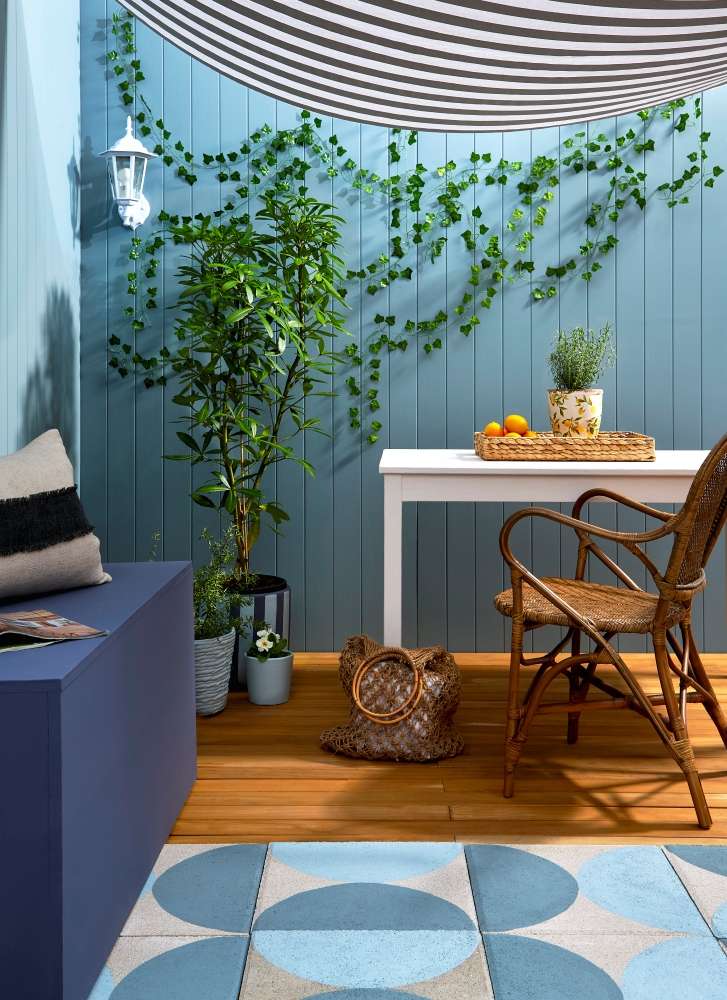
Check outdoor areas regularly for slipperymoss and mould build-up that can become slippery and dangerous - and can rotyour wood surfaces. Fence painted in Resene Bluff, deck stained in ReseneWoodsman Decking Oil in Resene Natural, bench seat in Resene Hammerhead, tablein Resene Quarter Bianca, concrete pavers and striped pot in Resene Hammerheadand Resene Halcyon, medium pot in Resene Solitude and small pot in ReseneHalcyon. Chair, cushions, lemon planter pots from French Country Collection,rattan tray from Bed Bath & Beyond. Project by Melle van Sambeek, image byBryce Carleton.
Open a window
Airflow is important to protect the life of your paint, especially in wet areas, like kitchens, bathrooms and laundries or if your rooms are on the southern side of your house. Make sure you have enough ventilation to prevent condensation build-up, suggests Resene paint expert Jay Sharples.
Well-built modern homes are designed to be airtight, but that can make it hard for moisture and steam generated from showers, cooking or even breathing to escape which can promote the build-up of mould or cause surfactant leaching and blistering on painted surfaces.
When painting, particularly in cooler temperatures, open windows to make sure there is plenty of ventilation and airflow in the room you're decorating so the paint fully cures, and use heaters if need be to warm the air temperature and promote drying.
If mould does appear, treat it with Resene Moss & Mould Killer. It’s also a good idea to check the ventilation in that area – you may need to open windows more for airflow and to avoid more mould.

Good ventilation is key to keeping paintwork and wallpaper in bathrooms fresh and mildew-free. Rear wall papered in Resene Wallpaper Collection M629-00. Pair it with crisp whites like Resene Rice Cake and wood colour stain washed in Resene Colorwood Bask and finished in Resene Qristal Clear.
Wet zone care
Avoid long showers for seven days after painting in a bathroom. Gently wipe walls down after showering in that first week, to reduce moisture. You can also protect surfaces in wet areas like kitchens, bathrooms and laundries by using Resene Kitchen & Bathroom paint, which has added antibacterial silver protection and MoulDefender to prevent mildew, Jay says.
Wallpaper in the wet
To protect wallpaper in bathrooms with Resene products, choose durable, moisture-resistant products such as vinyl wallpapers from the Resene Wallpaper Collection, which can be wiped clean of soap and moisture. Prime the walls first with Resene Waterborne Sureseal to ensure maximum adhesion and block any stains. Keep an eye out for your wallpaper’s washability rating by looking for a squiggly wave symbol on the label or ask the staff at your Resene ColorShop.
Top tip: For a clear finish to further protect wallpaper, use Resene SpaceCote Clear.
Garden care
Keep a check on your gardens through the year, particularly if lots of rain is expected. Make sure there isn’t too much plant growth pressed up against your home’s exterior or growing over pathways and wooden decking to help prevent rot, moss and mould which can be dangerous and damage your surfaces.

Modern homes are designed to be airtight but that can keep some moisture trapped so be sure to have plenty of ventilation when painting to ensure paint cures and dries properly. Walls painted in a base of Resene Cement with Resene Doeskin mixed with Resene FX Paint Effects Medium on top, floor in Resene Cement, bookshelf and large box on bottom shelf in Resene Sandal, coffee table and lamp in Resene Quarter Doeskin, stacked boxes in Resene Thorndon Cream and Resene Half Doeskin, painted books in Resene Doeskin, Resene Half Doeskin, Resene Sandal and Resene Cement, wave dish and planter in Resene Thorndon Cream and pedestal bowl in Resene Sandtex Sandal. Sofa from Nood, throw and cushions from Adairs. Project by Vanessa Nouwens, image by Bryce Carleton.
Post-flood care
One of the biggest mistakes people make after a flood or a major leak is rushing in to repair or repaint too quickly. Your first step should be to take photos for insurance, and then it’s important you let the affected areas completely dry out before starting any repairs.
Repairing too soon can cause future issues like mould or rot and you’ll be back to square one.
If the surface doesn’t need replacing when you’re ready to proceed, Jay suggests starting by giving the affected area a deep clean. Use Resene Paint Prep and Housewash on your exteriors. Treat water-damaged areas inside and out with Resene Moss & Mould Killer.
If damage is severe you may need to replace weatherboards, plasterboard or flooring, otherwise scrape or sand away any flaking paint and repair cracks. Once repaired areas have been sanded and dusted off, you can proceed with priming then applying topcoats as you would normally.
Top tip: If you’re not sure if your painted surface is sound enough to repaint or not, try a simple adhesion test: Cut a small X shape through the paint with a sharp knife. Press clear tape firmly across the X shape then rip it off. If the tape comes away clear the surface is sound. If the tape comes off and the paint comes too, it will need to be stripped before the surface is painted.
Master mildew
Aside from the obvious places to look for mould, like wet areas, also regularly check other places like behind sofas and other furniture like dressing tables and drawers. Anywhere that might lack airflow. Also look for areas of peeling wallpaper. Clean affected areas with Resene Moss & Mould Killer.
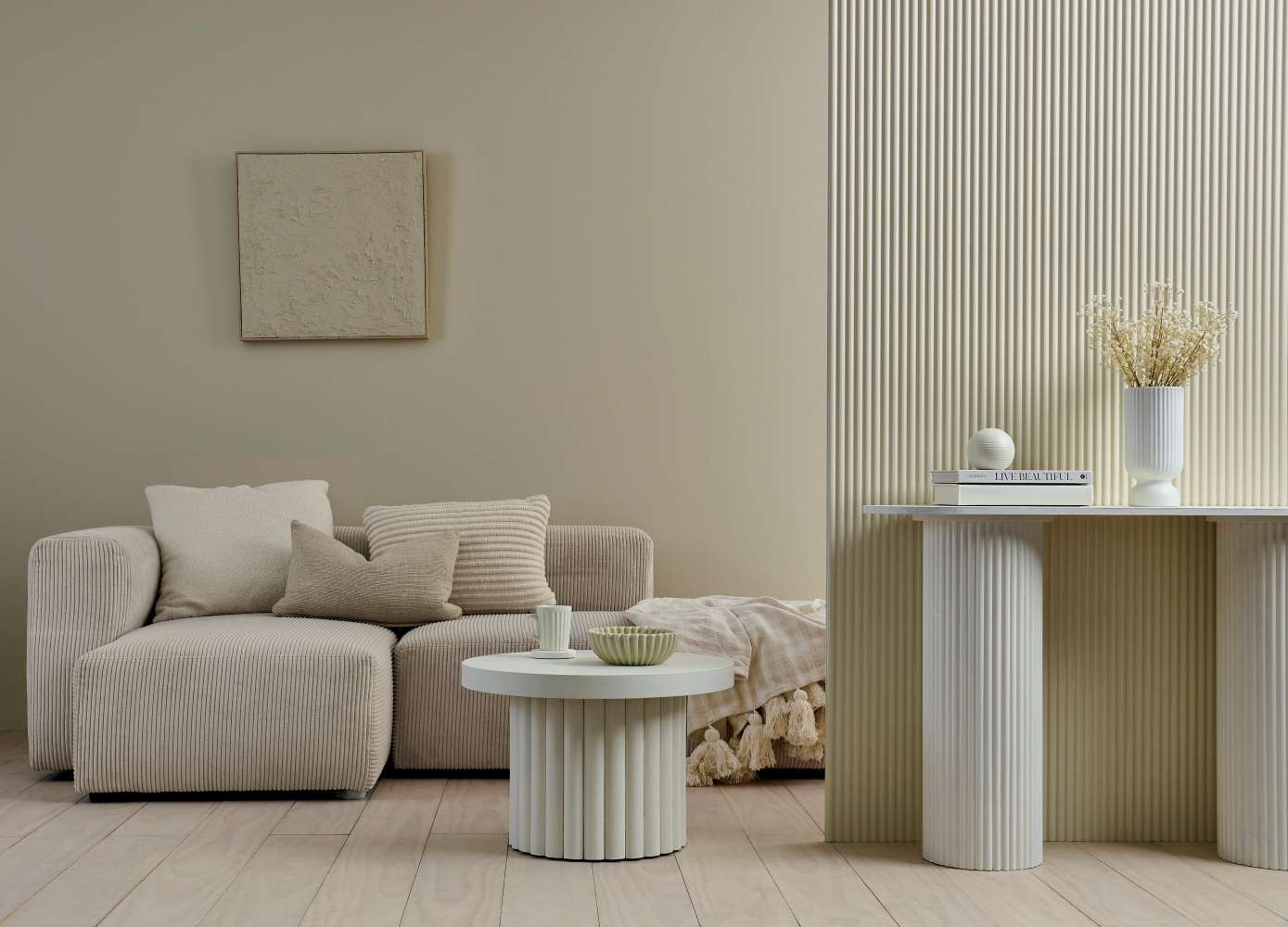
Protectyour beautiful paintwork by regularly checking your interiors for mildew ormould in all rooms, not just those exposed to steam or water. Don’t forget tocheck areas that don’t have good airflow such as behind couches and other largefurniture items. Rear wall painted in Resene Double Wheatfield with ribbedpanel in Resene Wheatfield, textured art in Resene Triple Wheatfield, coffeetable in Resene Half Wheatfield, console table in Resene Quarter Wheatfield,large vase in Resene Eighth Wheatfield, ball in Resene Wheatfield and scallopbowl in Resene Triple Wheatfield. Ribbed wall panel from NZ Panels, couch fromNood, cushions from Adairs. Project by Vanessa Nouwens, image by BryceCarleton.
Top tip: Consider asking the Resene ColorShop staff to add Resene MoulDefender to your Resene topcoat to further inhibit future moss and mould growth.
Be waterwise
Managing your own water use is also an important part of decorating, to help protect the environment (and prevent big water bills). Wash and rinse your brushes in a bucket to avoid wasting running water. Leave the bucket until the next morning before emptying. The paint will settle on the bottom so it can be removed separately from the water. You can then re-use that water. Dispose of any dirty water down your inside drains, rather than outdoor drains which flow to the sea.
When to go waterborne
While we’re talking about water and moisture, let’s talk about when to use waterborne paints and when you need to go with solventborne. Resene’s groundbreaking range of waterborne paints are suitable for most uses - it’s just a matter of talking to the experts at your Resene ColorShop about which paint is best for the conditions of your project.
Waterborne enamels such as Resene Lustacryl semi-gloss, Resene SpaceCote Low Sheen, Resene SpaceCote Flat and Resene Enamacryl gloss provide tough, durable, enamel-like finishes with all the benefits of waterborne paints such as non-yellowing, low odour and easy clean up in water. They can be used on walls, ceilings and wet areas, both inside and out. On trims and joinery, it is best to use Resene Lustacryl semi-gloss or Resene Enamacryl gloss as the higher sheen level will be easier to wipe clean.
Some decorators may prefer to use solventborne paints, such as Resene Super Gloss, on surfaces such as trim and joinery and in bathrooms and kitchens, where surfaces may be more prone to grease, scuffing, high humidity, moisture or where surfaces are pressed together.
One of the best aspects of waterborne paints is that they make for a much easier and eco-friendly clean-up with all brushes and painting gear (including clothing and spills) washing clean in water when wet. Always make sure you clean gear and clothing while it is wet. Dry paint is much harder to remove.
Did you know? You can tell whether a paint is waterborne with a quick methylated spirits test. Clean the paint surface then, using a rag with meths, gently rub the paintwork. If the paint dissolves, it is waterborne paint.
If you need help choosing the right products to best protect your home, come in and visit your local Resene ColorShop or Ask a Resene Paint Expert free online, www.resene.com/paintexpert.