The housing market in central Christchurch is facing a predicament, and even experts don’t know how it will end.
While house prices in the wider city are rising, the outlook for real estate in the CBD is uncertain after a recent intervention by the Ministry of Business, Innovation and Employment.
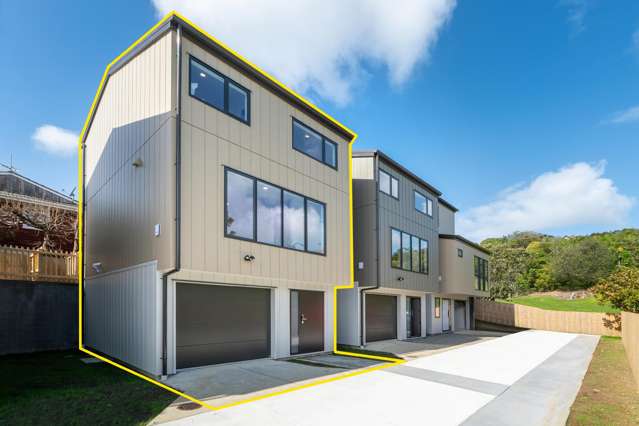
Investors and developers riding the city’s tourism boom have embraced short-term lets as a way to make money, but a ruling on a townhouse in a multi-unit block on Gloucester Street is making them nervous.
The streets around the new stadium are teeming with new-build apartments and townhouses, many run by their owners as short-term accommodation.
Start your property search
But some Christchurch residents claim Airbnbs are sucking the life out of the city and turning areas initially earmarked for long-term residents into a ghost town.
The MBIE determination released last month found that the owners of the Gloucester Street townhouse had breached the building code because they were running it solely as unhosted accommodation.
Doing so changed the use from sleeping residential to sleeping accommodation. The owners were ordered to comply with the stricter building code rules in place for visitor accommodation or to withdraw it as a short-term let.
Christchurch City Council or MBIE would not comment on the determination because it was under appeal, but MBIE head of building, system delivery and assurance Simon Thomas told OneRoof that each determination was considered in light of the facts of that case and was only binding on the parties to that determination.
However, the mere existence of such a determination has caused a stir in the city, with many questioning what this could mean for the thousands of multi-dwelling blocks being run solely as short-term accommodation.
Since 2023, the Christchurch City Council has tried to curb the number of properties being used for short-term lets, requiring resource consents for those in residential zones that are run as short-term lets for more than 60 days a year.
However, tracking these properties is not easy, and so far, only 304 applications have been granted – significantly less than the actual number believed to be operating.
Blackburn Management director Mike Blackburn, who analyses New Zealand’s construction and land development markets, said there was potential for a massive upheaval in the short-term rental accommodation sector.
He said properties that fall foul of the curbs could end up in the already well-supplied long-term rental market or be sold off because of poor yields. Either way it would push prices down, he said.
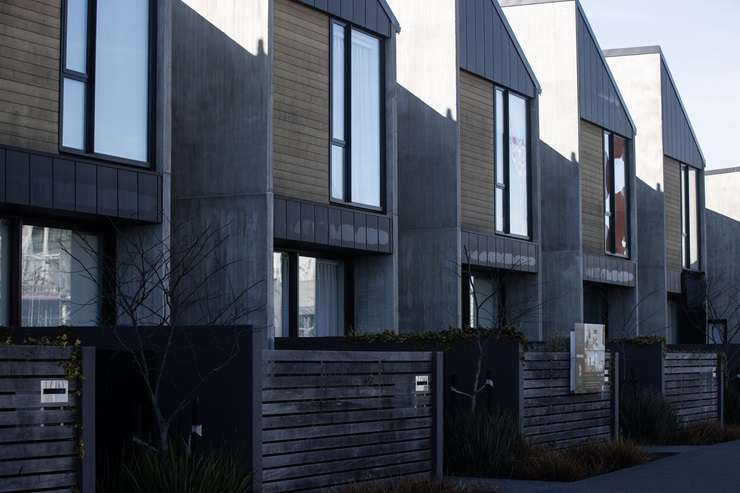
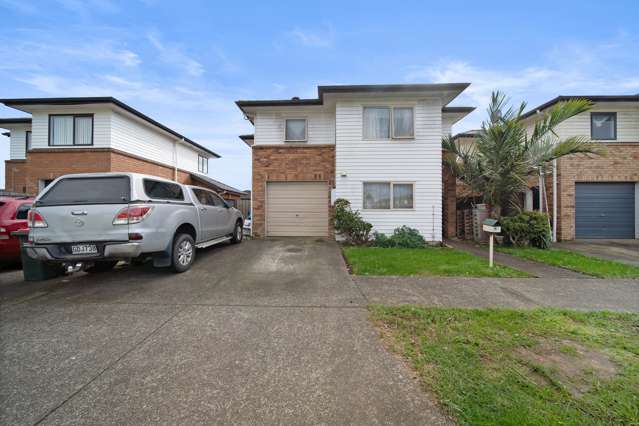
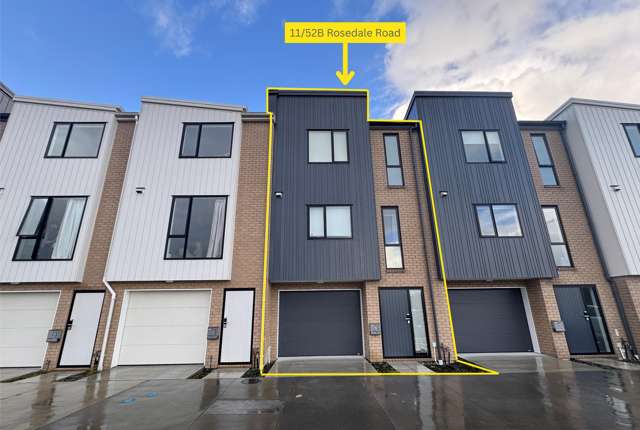
Townhouses in Christchurch Central. Photo / George Heard
The rise of Airbnb has opened Christchurch’s residential market to the global tourism accommodation market. Photo / Getty Images
He questioned why neither the council nor developers had picked up that a resource consent to operate an Airbnb or similar full-time was incongruent with the building consent that only allowed for sleeping accommodation.
“If you are a developer and you’ve applied for a resource consent and yet your building application is for something different, then you go, ‘Hang on’. If you’ve got the remotest thought that the owner is going to use this as an Airbnb, then it needs to be built to Airbnb (commercial accommodation) standards.”
However, Williams Corporation managing director Blair Chappell, who is a part owner of one of the biggest development firms in Christchurch, believed the determination had been “taken out of context in quite a bad way”.
“All it’s saying is short-term accommodation use is different from a multi-unit residential use. But is it? And if so, how?” he said.
He believed the determination confirmed “not from a precedent but from a principle” that if someone ran a property as a full-time visitor accommodation, then it could be treated as visitor accommodation under the Building Act, which brought extra responsibilities such as providing for those with disabilities or protecting from fire.
Discover more:
- Developer pays over $8m for mansion to protect luxury apartment views
- The suburbs knocked out of New Zealand’s $1m club - and the newest members
- Kiwis borrowing up to $600K to renovate homes they can't afford to sell
“It’s always about, in my opinion, safety. If there’s an issue, you need to make sure people don’t essentially burn in a fire – and that’s a crude way to say it. Someone who’s staying somewhere for a shorter period of time than, say, a long-term resident is obviously going to have less familiarity with what to do and where to go. But at that same time, someone could live there for 91 days, and it would be fine.”
Williams Corporation built most of its townhouses or apartments under the residential sleeping category of the Building Act because it assumed most people were going to be living in them. He said it would be “naïve” to think that an apartment would not change several times over its lifetime.
Chappell said the Building Act needed to be updated to provide more clarity.
“The main problem is the building rules [for visitor accommodation] are written for hotels and motels, which is one building, one operator, and no one has ever answered the question as to how that applies when accommodation is one unit in a 30-unit block or one house in a row of five, each with a different owner,” he said.
Christchurch City councillor Nathaniel Herz Jardine agreed the rules were a “mess” and called on the central government to step in.
“The whole Airbnb thing is this type of use that’s emerged over the last 10 to 15 years and the law hasn’t caught up with it, so we are regulating it with all these weird ways,” he said.

Williams Corporation managing directors Blair Chappell, left, and Matthew Horncastle. Chappell told OneRoof that the Building Act needed to be updated to provide more clarity. Photo / Supplied
He believed there needed to be more controls over how many Airbnbs were popping up in the central city. “The problem with Airbnb is that it’s taken land that was zoned residential – back when the master plan was made in 2014 it was intended to be for people who are residents – and it’s allowed a low-density form of tourist accommodation to spread into those areas.”
Herz Jardine said both central city residents and tourists felt parts of the CBD had become a ghost town.
“The result is that outside of times when we have major events, those areas feel really empty and dull and boring, and it also has the effect of driving up prices for inner-city living because what Airbnb really does is it connects the global tourism accommodation market with a local residential market. Those are the two big issues – it’s affordability and vibrancy.”
He said if the Gloucester Street determination was upheld, the council could look at its processes and potentially decline resource consent applications to run properties as short-term lets for more than 60 days. (Christchurch City Council confirmed this had not been part of the consideration to date, adding that any applicant was expected to comply with all legislative requirements.)
Herz Jardine said the determination had implications for house prices in the city. “At the moment we are seeing townhouses in the inner city selling on the basis that they can be used for short-term accommodation, so the prices that developers are getting for them are pretty high based on that predicted income. If we suddenly did have a lot of those on the market because they couldn’t be used for short stay anymore, we would expect the price to go down to meet the market.”
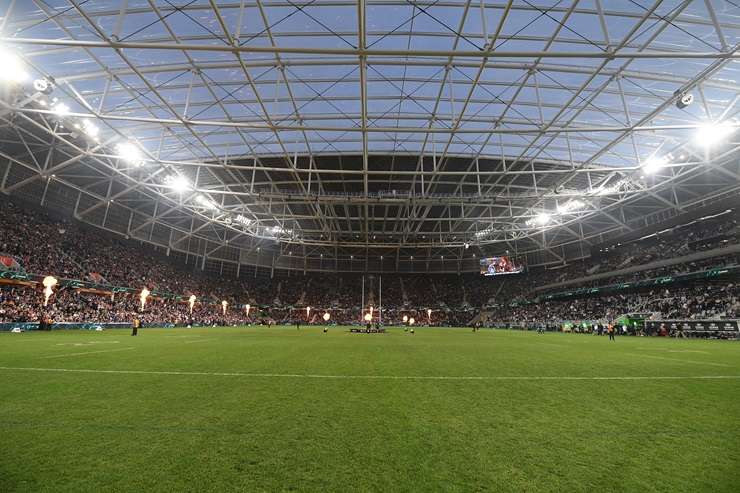
One NZ Stadium, in Christchurch, hosts the Warriors v North Queensland Cowboys game in June. The stadium has been a magnet for tourists. Photo / Photosport
Hotel Council Aotearoa strategic director James Doolan said from his perspective it wasn’t about getting rid of short-term accommodation providers; it was about closing the gaps between “highly-regulated hotels and motels and the completely laissez-faire attitude to short-term rentals”.
Doolan said it was undeniable that transient guests occupied and used a property in different ways to permanent residents, and the best ones were often designed in different ways with different spaces, features, amenities and finishes to reflect the occupants.
“Sometimes it’s noise, sometimes it’s people movements and excessive demand on lifts and other public spaces, sometimes it’s fire and life safety issues, sometimes it’s security concerns or the fact a residential building might always feel like a public space if it’s regularly hosting transient visitors.”
Jonathan Nicolle, a senior associate in litigation at Simpson Grierson, said the MBIE determination was not binding if upheld, but the principles could be worth noting for those with similar circumstances.
“They [MBIE determinations] can be persuasive and often cited by other councils in subsequent similar cases, but one can be distanced from the other.”
Nicolle said the fact that the Gloucester Street property was a multi-unit dwelling and had been used exclusively for transient (Airbnb) accommodation were important distinguishing factors.
“If you were using that property regularly yourself and sometimes as Airbnb, then I’d say you would have much less to worry about. On the other hand, if you were a property investor and you owned 20 of these things and you were purely just about using them for short-term transient accommodation for regular events then I think the principles here probably have much more concern for you.”
The Building Act makes clear that the obligation is on the owner to notify the council of the change of use. The change of use also had to be “reasonably practicable”, Nicolle said, noting there could be an argument that it may not be reasonably practicable for an apartment owner in a 60-block apartment to upgrade the stairwell for disability access, for example.
John Tookey, a professor in construction management at AUT, said that while there was the option of applying for a change of use of a building retrospectively, changing the use of a building wasn’t always an easy task and may not always be possible.
- Click here to find properties for sale in Christchurch