ANALYSIS: When banks lend to you and me at a fixed rate for our mortgages, they borrow money at a fixed rate at the same time in the wholesale markets to lock in a set margin. To do otherwise, such as lending fixed but borrowing floating, is quite dangerous in a country like ours where monetary policy has a history of large, unpredictable changes at times.
When wholesale borrowing costs go up with a lag none of us can predict, banks will lift their fixed mortgage rates. That is about to happen any day. Consider the cost to a bank of borrowing money to lend fixed for two years.
Two weeks ago that cost was about 3.7%. Now it is just over 4%. On average, these past two years the gap between that borrowing cost and the best two-year rate offered by the main lenders has been about 1.8%. It is currently near 1.4%, which is roughly the lowest such margin since late 2023.
We should not be surprised if the two-year fixed rates are soon lifted by 0.2% to 0.4%. Given the falling number of real estate sales over the past nine months and the near-complete lack of FOMO in the housing market, an increase closer to 0.2% than 0.4% looks likely.
Start your property search
Discover more:
- Tony Alexander: Where New Zealand house prices will rise first and why
- Ultra-cheap home loans are gone - how much mortgage pain lies ahead?
- Former Bendon boss and Bachcare founder list their $6m-plus ‘house in the sky’
For other terms, the degrees to which current lending margins are below average are even greater. It would take a 0.7% rise in five-year fixed mortgage rates to bring them back to their margin average for the past two years. For the one-year rate, a 0.5% rise would be needed. In reality, maybe a 0.3% rise will occur.
Why have wholesale borrowing costs suddenly increased so much? Because international medium- to long-term borrowing costs have jumped. Why have they gone up? Partly because of deepening concern about the large size of the US Federal budget deficit, lack of a clear path to reduce it (US President Donald Trump is promising a large blowout), and well-publicised selling of US bonds by some investment funds and foreign governments.
The blowout in borrowing costs is also being caused by massive bond issuance planned to finance their investment in AI – the data centres themselves along with electricity generation.
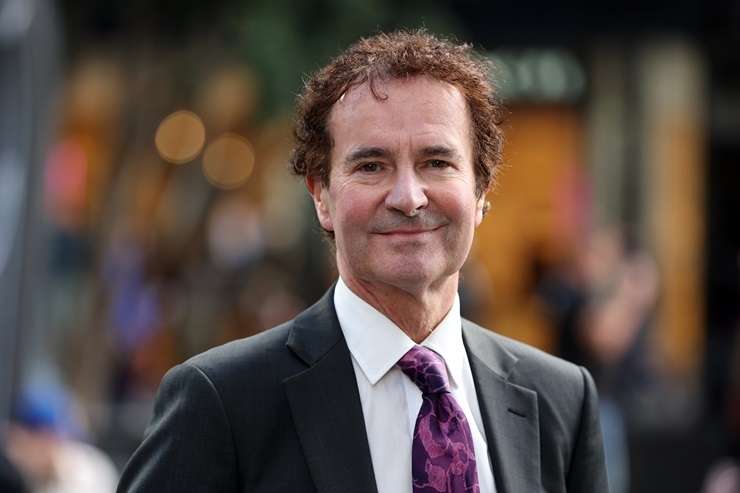
Independent economist Tony Alexander: “For the housing market, the prospect of higher interest rates is likely to keep buyers cautious.” Photo / Fiona Goodall
There is also some upward pressure from previous complacency about inflation starting to prove misplaced. In contrast to the recent dovish note struck by our central bank, others offshore have been strengthening their warnings about a need for higher interest rates.
At this stage there seems little need to be scared about a growth-crunching surge in interest rates. But borrowers should be aware that it is not just the cyclical recovery in our economy placing upward pressure on New Zealand interest rates. Offshore forces are at work as well.
For the housing market, the prospect of higher interest rates is likely to keep buyers cautious as they peruse the many properties listed for sale. The approaching general election will also tend to suppress investors at least for the next couple of months and maybe a lot longer if tax policies change as a result of the election.
But is everything acting against the housing market? No. Job security is a key driver of people’s decisions to purchase a property, and the outlook there is positive. Not booming – just positive. Firms are indicating above-average plans to hire people. But given the deep concern about the approaching election revealed in the results of the monthly survey I run with Mint, a decent lift in job numbers is a story for next year, and not 2026.
- Tony Alexander is an independent economics commentator. Additional commentary from him can be found at www.tonyalexander.nz