OneRoof’s Ask the Expert series is aimed at helping consumers cut through the noise when buying goods and products for their home. It’s hard to make a decision when there’s so much out there, so who better to trust than the people who have the expertise and use these items for a living?
A child’s desk rarely stays one thing for long. It might start as a place for colouring, Lego and play, then become command central for homework, laptops, gaming, exam revision and half-finished art projects.
Which is why choosing one isn’t quite as simple as picking the cutest little desk you can find.
Joe Bradford, CEO of Work From Home Desks, believes the best children’s workspaces are built to grow with the child.
Start your property search
“An adjustable desk is ideal for kids because they change so quickly, not just physically, but creatively too,” he says. “One year it’s colouring books and Lego; the next it’s laptops, projects and study.”
Andrew Hill, sales and marketing director at New Zealand manufacturer Coastwood Furniture, identifies the following qualities as key: desk size, the right chair, enough workspace and a set-up that supports good posture.
Coastwood Furniture doesn’t make adjustable desks, but it does have a range of ready-made children’s desks Hill says will stand the test of time.
Start with fit, not furniture trends
Hill says the ergonomic target is feet flat on the floor, knees at roughly 90 degrees, elbows at roughly 90 degrees when resting on the desktop, and a straight back supported by the chair.
In practice, most families can achieve this with a fixed-height desk, an adjustable chair and, for smaller children, a footrest. “Match the desk and chair to your child, not the other way around,” he says.
Bradford agrees, arguing that a desk that’s either too big or too small can affect a child’s posture significantly, especially at an age when their bodies and habits are still developing.
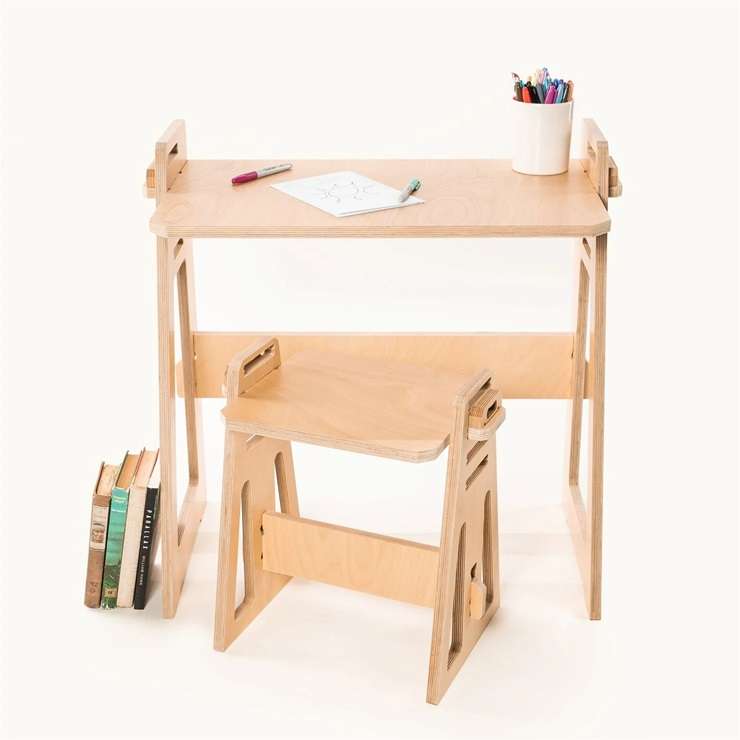
Work From Home Desks do a specific Kids at Home Desk & Stool. Photo / Supplied
Work From Home Desks were launched during the Covid lockdowns and offer a range of adjustable desks, with add-on modules made in New Zealand from Birchwood timber. They also do a specific kids-at-home desk and stool.
He sees adjustable desks as a longer-term investment.
“A desk that can adapt over time gives children the freedom to work comfortably through different stages, interests and routines, while encouraging healthy work and focus habits from an early age,” he says.
Bigger usually better - within reason
One of the most common mistakes parents make is buying a desk that’s too small.
Hill says around 800mm wide is the practical minimum for handwriting or a single device, while 1000-1200mm gives a child enough room for a laptop and an open book. A depth of 500-600mm is usually sufficient.
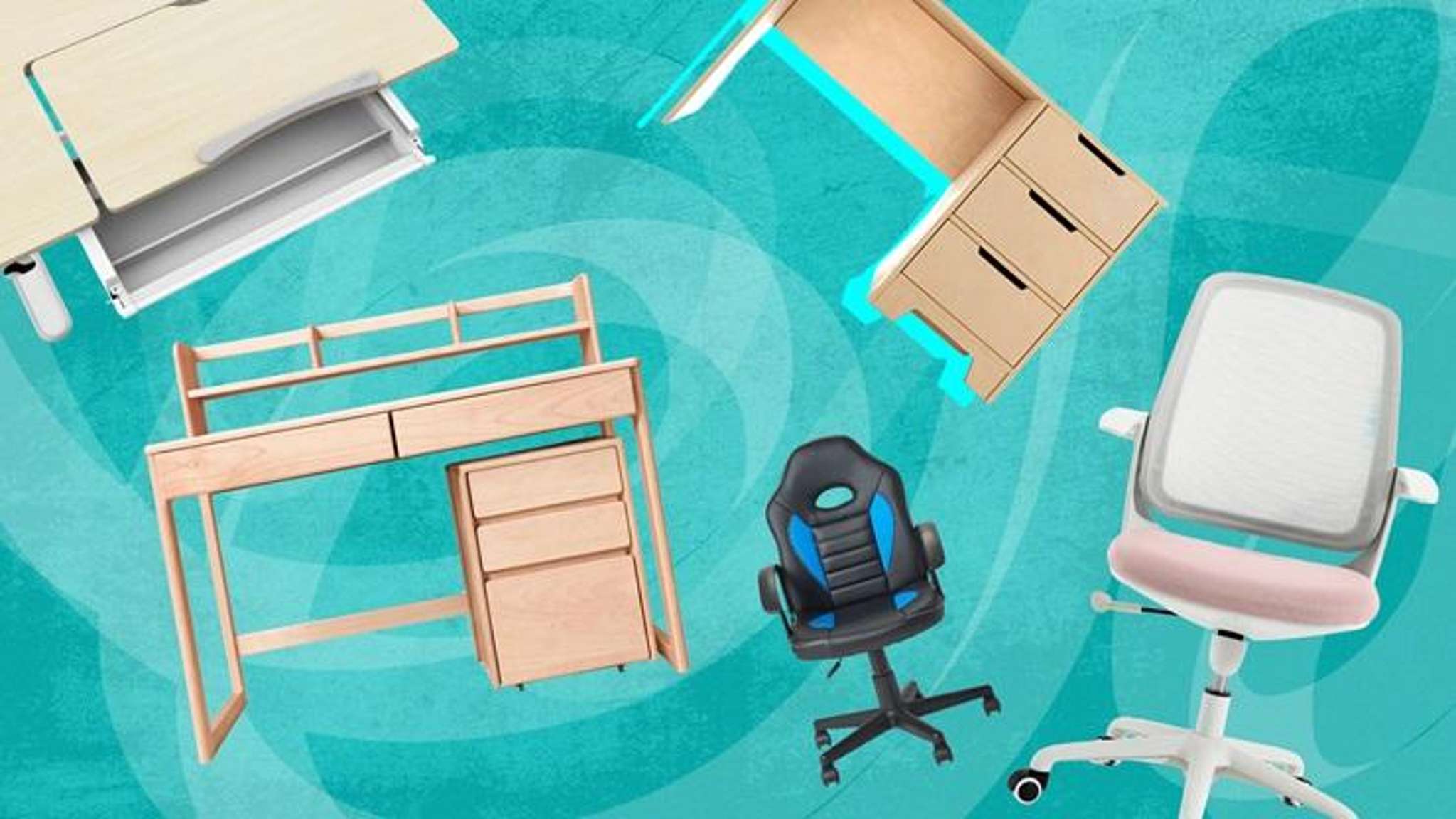
This Milo Kids Desk from Urban Sales fits those dimensions in solid Birchwood or this version with a low hutch and chest of drawers.
Bradford says parents often underestimate how much space children actually use.
“Kids use their desks for far more than homework. Creative projects, reading, gaming, crafts, studying and using multiple devices all tend to happen in the same space,” he says.
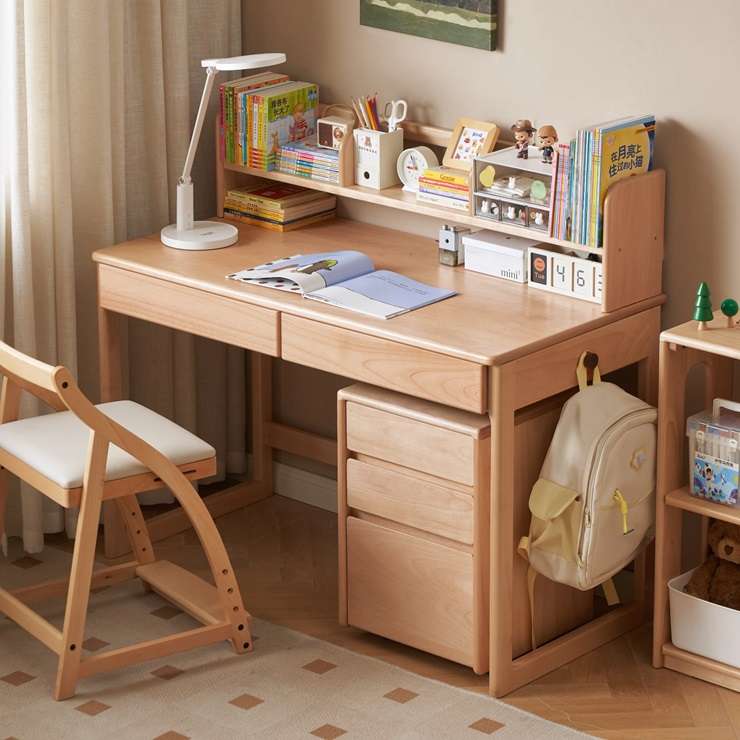
The Milo Kids Desk from Urban Sales. Photo / Supplied
When children don’t have enough room, they start twisting, hunching or perching awkwardly to make everything fit. “A good workspace should support the way kids naturally work, not force them to adapt around the furniture.”
For those looking for an ergonomic study desk, this one from PBTech can shift in height, and has a five-year warranty for the frame and electronic motor.
Don’t overlook the chair
A common trap, Hill says, is spending heavily on the desk and treating the chair as an afterthought.
But poor posture is often caused by the chair set-up rather than the desk itself. A desk that’s too high can make children hunch their shoulders. A chair that leaves their feet dangling can cause them to slide forward and lose back support. A screen that sits too low encourages them to look down for extended periods.
This Linspire chair from Urban Sales comes in a range of colours and is fully adjustable, including height and armrests, while this Ikea Vimund chair is also adjustable and ranks highly among users.
For children using laptops, Hill says one of the best upgrades is a laptop stand paired with a separate keyboard.
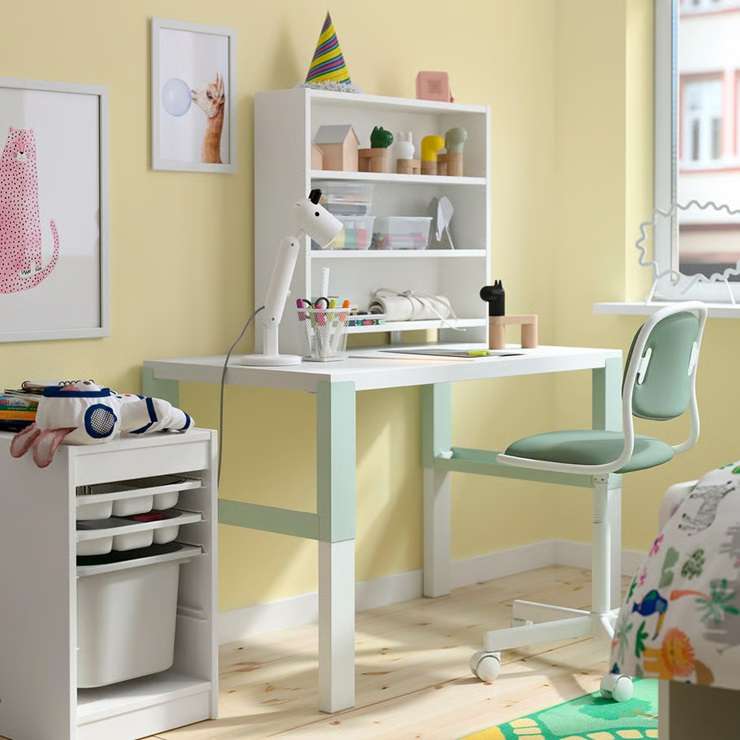
The PÅHL Desk with shelf unit from Ikea. Photo / Supplied
Bradford says movement is just as important as furniture. “Kids should be encouraged to move regularly rather than staying seated for long periods. Even short movement breaks every 30 to 60 minutes can make a big difference.”
Hill agrees, telling OneRoof that standing up and moving every 20 to 30 minutes is a sensible rule.
Desk storage: Helpful, until it becomes a dumping ground
Drawers sound useful, but both experts say they can easily become clutter traps.
Hill says two drawers are usually enough for a child, while a full pedestal of drawers can eat into legroom and rarely gets used properly.
Bradford says open shelving can be more practical because children can see the things that inspire them. “When those things are visible and easy to access, kids are naturally more likely to engage with them,” he says. “A workspace shouldn’t just store creativity; it should encourage it.”
Think twice before buying “meantime” furniture
Bradford says one of the biggest mistakes parents make is treating a child’s desk as temporary. “Kids grow quickly, so it’s easy to buy a cheap ‘meantime’ desk thinking they won’t use it for long anyway,” he says.
But a workspace that feels permanent, functional and genuinely theirs is far more likely to be used well.
If premium is your focus, it would be hard to go past Moll, but the German design comes at a price.
Hill says material matters too. Solid timber and good-quality plywood will generally outlast melamine-coated particleboard, which can swell if it gets wet, chip at the edges and struggle with being disassembled and reassembled.
This Pahl desk from Ikea has shelving and is made using particleboard and may be a shorter-term option.
Overall, both experts agree on the fundamentals: choose a desk with a generous, clear worktop, a stable frame, enough legroom and a durable finish. Then get the chair height right, lift any screen to eye level, and make sure your child has room to spread out.