The five things you need to know about the housing market this week.
1. OCR rises are only a matter of time
The main economic news last week was the Reserve Bank's decision to keep the Official Cash Rate at 2.25%, but it was a very close call – the vote was split 3-3, with Governor Anna Breman casting the deciding vote. The Reserve Bank's accompanying Monetary Policy Statement threw things forward, with the economic forecasts downgraded, and the inflation forecast revised higher. As things stand, an OCR increase on July 8 looks likely, with more to come thereafter, as the Reserve Bank tries to stop second-round inflation becoming embedded.
Expect continued sluggishness in the housing market, with higher interest rates, a soft economy, and stubborn unemployment (stuck at around 5.4% for the next year or so) all contributing. Cotality had predicted a 10% rise in home sales this year (from about 90,000 to 100,000 in round numbers), but our forecast model now points to stability at around 90,000, which would be a good result.
Start your property search
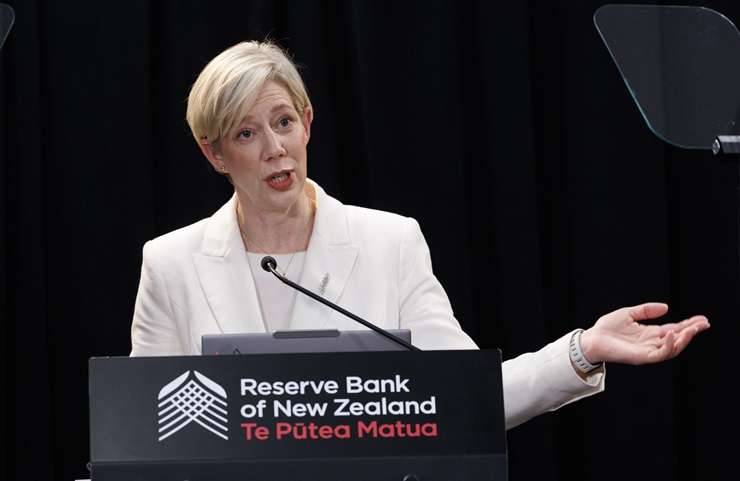
Reserve Bank Governor Dr Anna Breman's deciding vote kept the OCR at 2.25% last week, but the market has priced in a rate hike in July. Photo / Mark Mitchell
2. Mortgage lending activity is cooling
The backdrop of rising interest rates makes it no surprise to see a recent slowdown in mortgage lending activity. Indeed, there was around $8 billion of new mortgage lending in April, across house purchases, bank switching/refinancing, and loan top-ups. Not a terrible figure, but the $0.4b year-on-year increase was the smallest in 20 months.
Investor lending cooled a bit more than owner-occupiers in April, especially on the interest-only front, and the split by loan-to-value ratio – debt-to-income ratios generally remain under control too (i.e. the 20% speed limit isn’t binding). As I’ve mentioned before, there is genuine wariness out there amongst investors that a change of government could see interest deductibility phased out again.
3. Not great but not terrible either
The NZ Activity Index rose 2.1% in the year to April, decent but the slowest in nine months, since July last year. Filled jobs managed to edge higher in the same month, but these figures tend to be downwardly revised and "lag" the economic cycle anyway (as firms horde labour). Meanwhile, both consumer and business confidence from the ANZ surveys lifted a little, but remained at low levels. On the whole, it could have been worse.

Cotality chief economist Kelvin Davidson: "As things stand, an OCR increase on July 8 looks likely." Photo / Peter Meecham
4. Budget ‘leans into’ big-picture intent for more housing supply
The Government’s Budget 2026 contained measures to keep growing the social housing stock (around 2000 new dwellings), a continued push to replace the RMA with a planning policy that is more in favour of new housing, and a $400m pot of money for councils to share in based on how many consents they approve. It all seems pretty worthy stuff, and although it may not be revolutionary, anything that boosts our supply of housing will be positive.
5. More people fixing longer again in April?
Just a quick look ahead to data this week, late on Friday we’ll get the split of mortgage activity in April by the loan terms people chose. From the tail end of last year there’s been a strong shift away from floating rates and short-term fixes, and firmly towards longer rates (with the two-year term popular), as people look to avoid even higher mortgage rates later. It seems almost certain we’ll see more of the same in the latest figures.
- Kelvin Davidson is chief economist at property insights firm Cotality