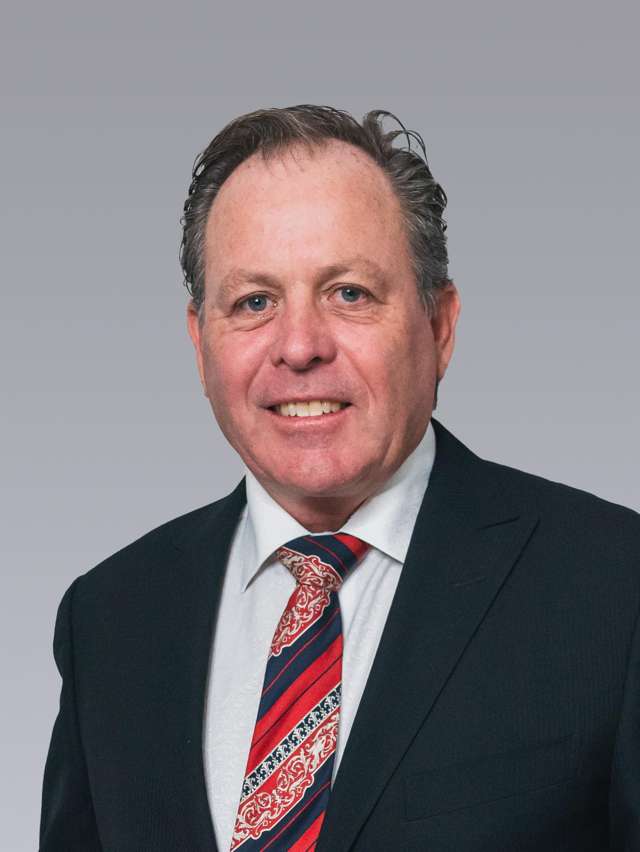
- Rawdon Christie transitioned from journalism to real estate, leveraging skills from his BBC background.
- He emphasises the importance of ethics and thoroughness in both professions, especially in real estate.
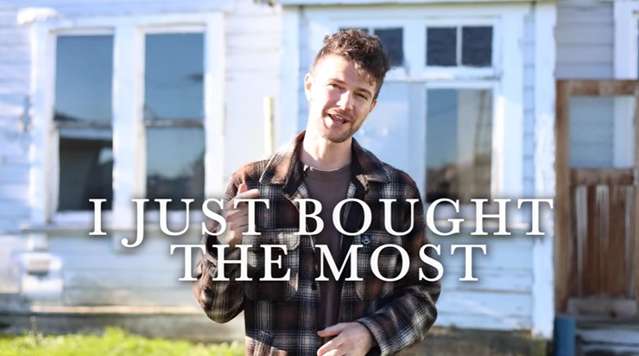
- Christie plans to launch a YouTube channel to educate people on real estate processes and information.
Rawdon Christie once interviewed politicians on Agenda and sat on the Breakfast couch at TVNZ, but since switching to real estate five years ago, he’s now fully transformed: he no longer thinks like a reporter; he’s now a businessman.
Start your property search
The skills he learnt as a BBC journalist have come in handy, but he’s also learned some new ones, and he has developed, he says, a “harder edge”.
But his journalism skills haven’t entirely left him, and he talked to OneRoof fresh from commenting on the impact of war on Iran and as he was preparing to launch his own YouTube channel.
The Barfoot & Thompson agent, who sells mainly in Auckland’s Remuera and the eastern suburbs, turned to property after Covid hit. He had been let go from Breakfast five years before that and was making a living running media workshops and MCing events. But that all dried up in 2020.
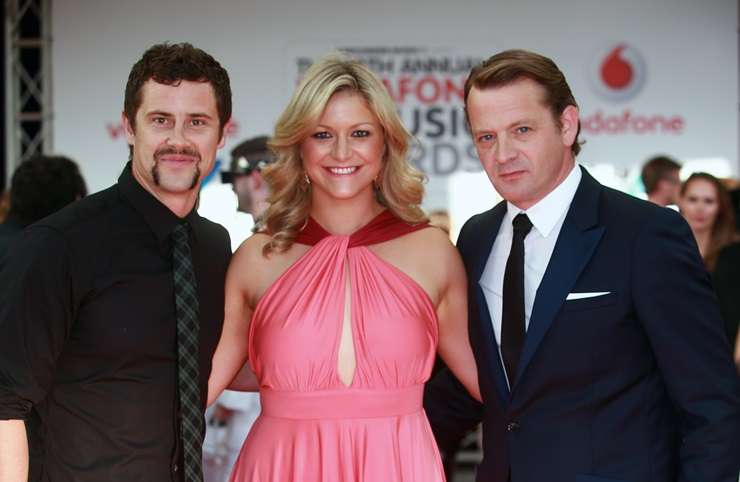
Christie with Sam Wallace, left, and Toni Street in 2013. The trio were a familiar sight on TVNZ’s Breakfast couch. Photo / Norrie Montgomery
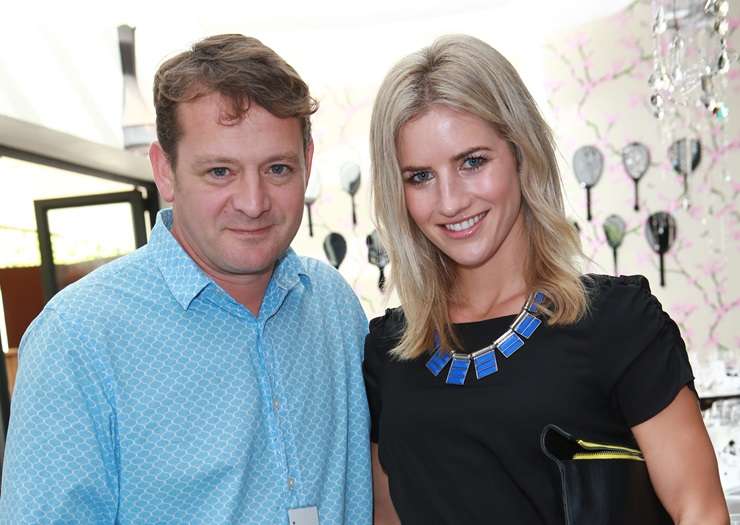
Christie with his former Breakfast co-host Alison Pugh in 2014. Photo / Norrie Montgomery.
Christie says he is now able to look at himself and say: “Hold on, I actually am a businessman."
The harder edge has come about because tough business conversations sometimes have to be held in real estate, especially in these hard times, he says.
People might think their house is worth more than it is, or they might think their décor, or DIY, is nicer than it is, or Christie might have a sense they are holding something back, and occasionally, he will walk away from a listing for this reason.
Tough conversations can be uncomfortable when you’re not used to them, he says, and even though the last three years haven’t been exactly kittens and rainbows, nowadays he can have a tough conversation “in the right way, which is only going to help”.
Discover more:
- 90s All Blacks star selling his Remuera mansion
- Overseas Kiwis buy historic Simpsons Beach bach
- Golden visa opens door to 'castle in the clouds'
Journalism has come in handy with skills such as reading people and body language, but also because it grounded him in ethics, which he says both professions are strong in.
That might surprise, given journalism and real estate often feature low in trust ratings, but Christie says that’s not warranted.
As an agent, he has been impressed by how highly regulated the industry is and says a lot of time is focused on disclosures and compliance, areas that can bring stiff penalties if agents are not careful enough.
“We have to be so detailed, focused and thorough. This is another parallel with journalism. You know, you can’t write a story and leave a few bits to chance or make assumptions. You’ve got to be able to account for what you’re writing, where your information is coming from.
“If we [agents] get a school zone wrong in a bit of marketing, we could be for the high jump.”
And if an agent fails to disclose something to a buyer that the owner might know but the agent has not ascertained because they’ve not asked the right questions, they could face the Real Estate Authority, which Christie says is a powerful organisation.
“They don’t really treat us with kid gloves. They want everyone to learn from it, so we have to be incredibly thorough.”
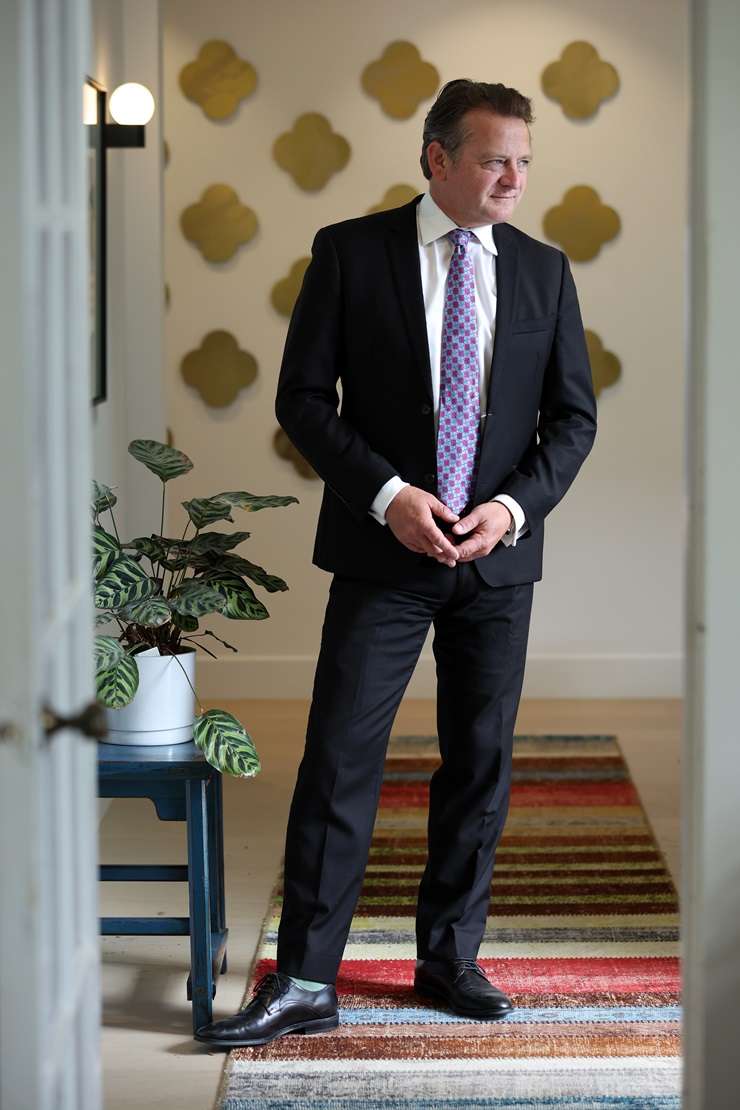
Christie hasn’t abandoned journalism altogether and is now preparing to launch his own YouTube channel. “I’ve sat there thinking I’ve got a lot of experience in front of a camera, why am I not using it?” Photo / Fiona Goodall
He says around 80% of the level 4 salesperson qualification he had to do was focused on contracts, legal issues, an agent’s obligations and the Code of Conduct, which came in about 10 years ago.
“It’s a huge part of everything we do. I love the fact that it’s so tightly regulated.”
Christie says that even though he made the switch to real estate quickly because of Covid, he had already spent a lot of time thinking about which skills were transferable and where there were parallels.
His opening was through Barfoot & Thompson chief Peter Thompson, whom he knew well because their children went to the same school. Christie says he respected Thompson’s focus on family and the community.
“He sets a high standard, especially when it comes to work ethic and focus on people.”
Christie also credits his branch manager and mentor, Carolyn Vernon, and says he has learned how to be a better negotiator from his sales partner, Steve Hood.
But when it comes to smelling a rat, that part is like a journalist with a source: “You’ve got to work out whether they are credible. Are they telling the truth as far as you know, or whether you are smelling a rat and you have to tread a bit more cautiously?”
Christie has racked up 120 sales since starting. He has only walked away from a couple of listings, each time because he wasn’t entirely comfortable with the information he was being given.
“I was taught very wisely at the beginning that not all business is good business, and that would be true of any business, I imagine.”
On the Breakfast couch, he would interview eight people a day, five days a week, which meant having to quickly assess personalities and work out the best approach to get the information needed.
That skill has transferred, and while real estate is about sales, Christie says the real skill is in making not just a sale but the best sale.
The commission agents get for a $1.5m sale compared to a $1.6m sale is negligible, he says, but the difference an extra $100,000 a vendor makes can be life-changing.
“To me, the real satisfaction isn’t just getting the sale but knowing that we have just got the most we could get out of this market. That’s very cool, and that brings a huge level of reward, but it also brings pressure with you to make sure you are doing the very best you can for your client.”
He asks himself: “If I had engaged me to sell my house, what would I want me to be doing right now as far as getting the result?”
He’s also aware that selling or buying a home is high stakes for people, and sometimes the tough conversation has to be held with a gentle touch, especially with people who are having to sell, or who are having to come to terms with the fact the market has fallen and their property is worth 30% less than they thought it was.
“The other thing to remember is this is potentially the biggest thing they’ve done financially in their lives, and if they don’t hear from you for three days, they’re only thinking bad things.
“Actually, this is something else journalism prepares you for. You know, you work your contacts, and you have to keep in touch with them and make sure you’re in a position where they’re always going to come to you first.
“In the same way, when you’ve got a vendor or a client, you’ve got to be in constant contact with them the whole time, because they are desperately trying to work out what’s going on.”
For all his journalism and experience in front of a camera, Christie says he has not marketed himself to take advantage of that, and in part that’s why he is giving himself a May deadline to launch his YouTube channel.
“I’ve sat there thinking I’ve got a lot of experience in front of a camera, why am I not using it?”
The channel would be to provide information, rather than to promote listings, because he has realised there is a lot that people don’t know.
“It’s going to be the Edmonds Cookbook of real estate but in YouTube form. I’m hoping, and this is the idea, that it becomes something that is a go-to source, so that people can find out what they need to know.
“What is a Lim? What questions should I be asking a real estate agent when I’m going through an open home? What do these answers actually mean?
“How do I find a lawyer? What sort of advice should I be getting, and where can I get it? What does it actually mean on a Lim when you see this? What is this type of cladding - is this nice or is it risky?
“There’s a lot of information out there people don’t understand. If you’ve never bought a house before or you’ve never sold a house before, there’s a whole heap of stuff you need to know.”
While nothing will beat the adrenaline of a live news report, Christie says he does not pine for journalism, although he enjoys appearing on Ryan Bridge Today as a panelist, but says that’s low stress, although he has offered up an opinion on Donald Trump and the war with Iran, which, he says, has already had an impact on real estate in New Zealand.
“We’re all sitting here slightly nervous anyway economically because it’s election year, and this has almost made some people go ‘OK, we’re going to sit on our hands again’.”
FOMO (fear of missing out) had only just started creeping back into the market, but had dissipated and the market had gone a bit flat, he said.
The ripples from the war, he says, have a long reach and, real estate aside, “I think everyone’s been really angry about the fact that one person has seemingly single-handedly had such a massive effect on our economy”.
- Click here to find properties for sale