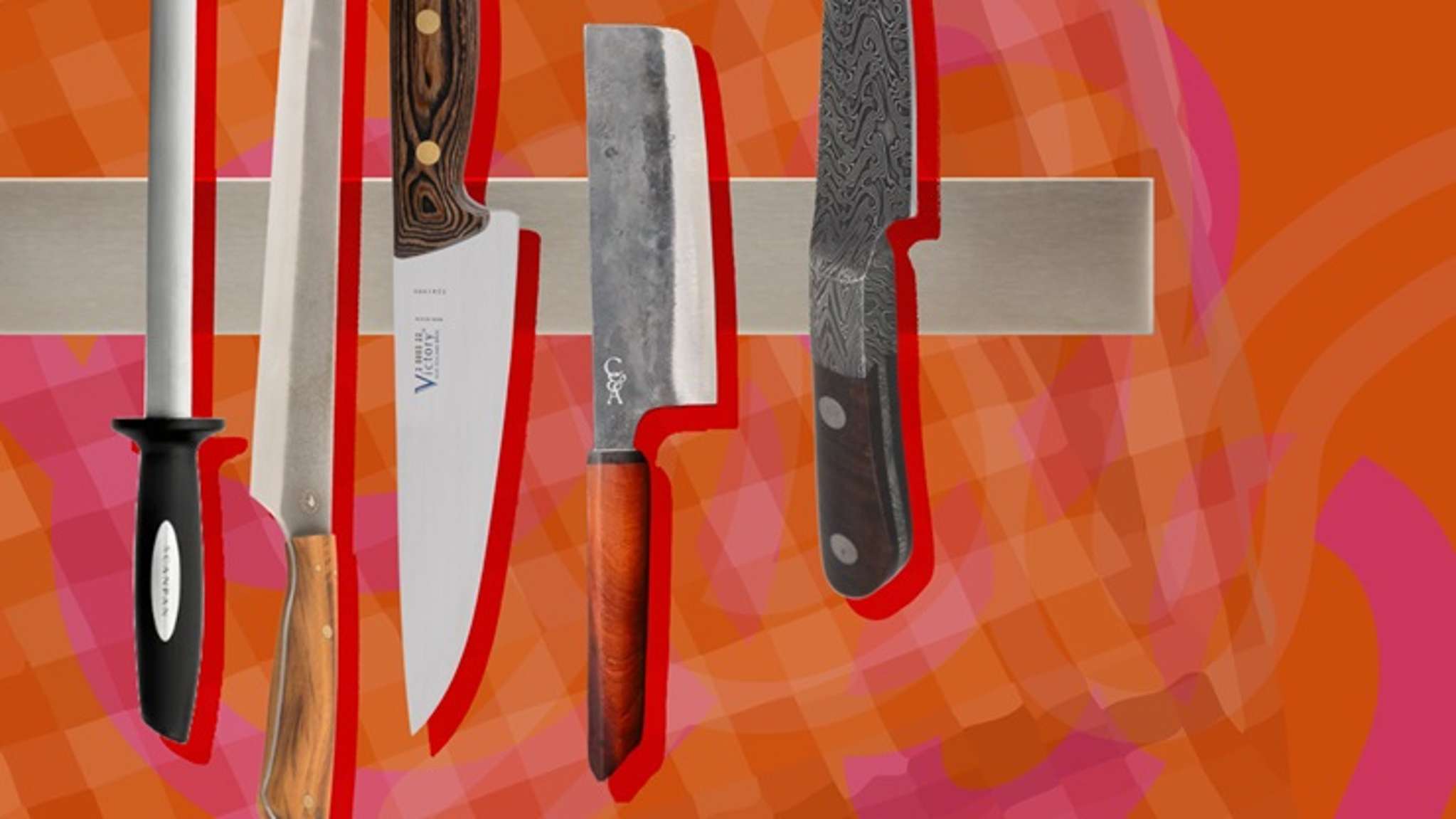
OneRoof’s Ask the Expert series is aimed at helping consumers cut through the noise when buying goods and products for their home. It’s hard to make a decision when there’s so much out there, so who better to trust than the people who have the expertise and use these items for a living?
A good kitchen knife is one of the most important tools in any home, yet it’s also one of the most misunderstood purchases homeowners make, says expert knife-maker Willie van Niekerk.
The New Zealand craftsman behind Kiwi Blade Knives, whose handcrafted knives are used by celebrity chef Simon Gault, says many people begin their search in the entirely wrong place.
“The biggest mistake people make is not considering their own needs in the kitchen,” says van Niekerk. “Buy for the way you cook, not the way someone tells you to cook.”
Start your property search
Gault turned to van Niekerk when commissioning a custom knife in honour of his late father, who served in the Air Force and left Gault his flying wings. Rather than storing them away, Gault asked van Niekerk to incorporate the wings into his knife handle, creating a piece of kitchen equipment he uses every day.
Van Niekerk says one high-quality knife will always outperform a drawer full of average ones. “Get the best you can afford. You get what you pay for. Inferior steel goes blunt quickly and often stays that way.”

Celebrity chef Simon Gault. He commissioned Kiwi Blades’ Willie van Niekerk to make a special knife honouring his father. Photo / Supplied
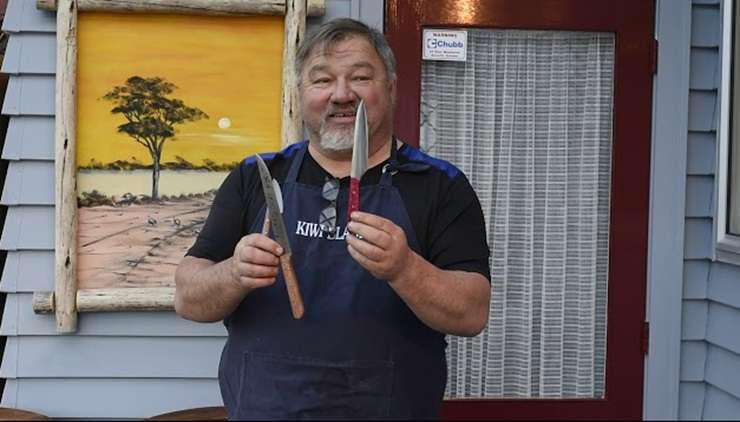
Kiwi Blade Knives founder Willie van Niekerk: "Sharp knives work better, and they’re much safer to use." Photo / Supplied
Rather than chasing online trends, he recommends buying from a reputable maker or retailer able to provide advice and after-sales support.
If you’re buying just one knife, van Niekerk suggests choosing something versatile such as a French chef’s knife or a larger Santoku, ideally with a 17cm to 20cm blade, capable of handling vegetables, meat and everyday preparation.
A chef’s knife typically features a wide, solid blade with minimal flexibility, making it ideal for heavier chopping tasks. A Santoku performs similar tasks but has a narrower, lighter blade, often with a hollow edge to prevent food sticking.
Kiwi Blade Knives has versions of both blades, as do retailers like Southern Hospitality and Milly’s Kitchen. The Homestore also has a good range of chef’s knives.
Van Niekerk is more cautious about imported Japanese knives, which are currently in vogue. He says many Japanese knives aren’t tempered, so the blades can be fragile. Used incorrectly on bones, frozen food or on hard surfaces such as glass or stone, they can chip or break.
Steel, balance and fit matter most
Van Niekerk says performance comes down to blade quality and construction. “A knife is all about the quality of the blade and how well it’s made. Your knife doesn’t have to look flashy to work well.”
The shape of the handle, weight and balance are highly personal, he says. “Pick it up. You’ll know by the feel of it. Handling a knife is instinctual.”
Those who use knives a lot and have busy family kitchens should consider weight carefully, and choose the knife that suits their hand strength.
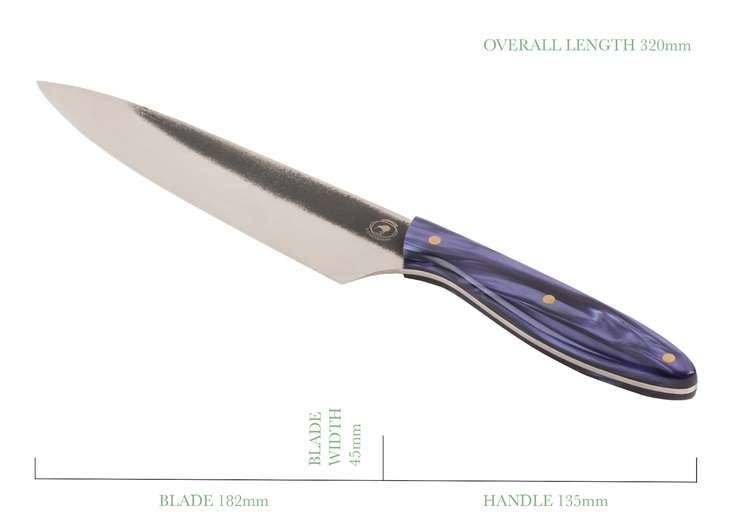
Kiwi Blade Knives’ Sweet Violet French chef’s knife. Photo / Supplied
Handles should be properly pinned and glued, not simply glued. Van Niekerk also says buyers should look for water-resistant synthetic materials. He says wooden handles also perform well, but should not be left soaking in water or left out in the sun.
For messier tasks such as meat preparation, van Niekerk recommends sculpted or textured handles, which will prevent slipping or twisting during use.
Stainless steel v carbon steel
How much maintenance you are willing to do should influence your pick of blade material. Stainless steel is the lowest-maintenance option for most households, with van Niekerk noting that modern stainless steels contain enough carbon for sharpness alongside alloying elements that reduce corrosion.
High-carbon steel blades can achieve exceptional sharpness but require washing, drying and oiling after use to prevent rust. They also darken and discolour over time, particularly when used on acidic foods such as tomatoes, says van Niekerk.
“High carbon blades are beautiful; you just have to know how to look after them and be prepared to look after them.”
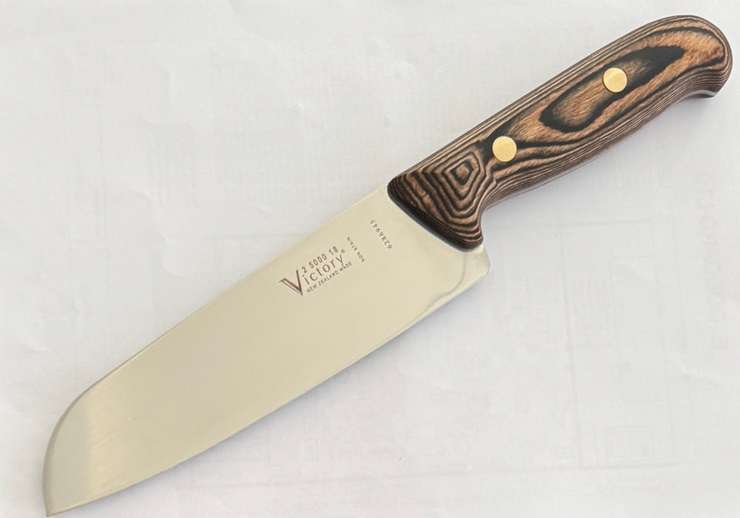
A Victory Santoku knife. Photo / Supplied
Cain & Abel has a range of carbon steel knives, while Victory also do a range of stainless steel knives, which receive positive reviews.
Damascus or layered steel knives look beautiful with distinctive patterns, but their quality varies widely, says van Niekerk.
“Cheap Damascus knives can sometimes be style over substance,” he says. Damascus blades are an interweaving of two or more different types of steel. But, because they can only be heat-treated at one temperature, it is necessary to buy from a quality Damascus knife maker to ensure consistency of the cutting edge all along the edge of the blade, he says.
Matt James, from Damascus New Zealand, has been hand-making knives for 30 years and makes Damascus steel for knife-makers. He says people often buy it for the look, but the grade of different steel used is critical as he weaves together multiple layers to create beautiful patterns. He also agrees that a medium-length chef’s knife is key in any kitchen and says a good paring knife can pick up the slack where a chef’s knife can’t (Sabato has a nice French paring knife).
How to care for your knives
According to van Niekerk, poor care, not age, ruins most kitchen knives.
He says buyers should think about storage and how they'll sharpen the blade. Magnetic knife racks on a wall, a knife block or a dedicated, custom-built knife drawer, where each knife is separated, are ideal.
Stevens has a 40cm magnetic block, which allows you to display your knives and find them easily.
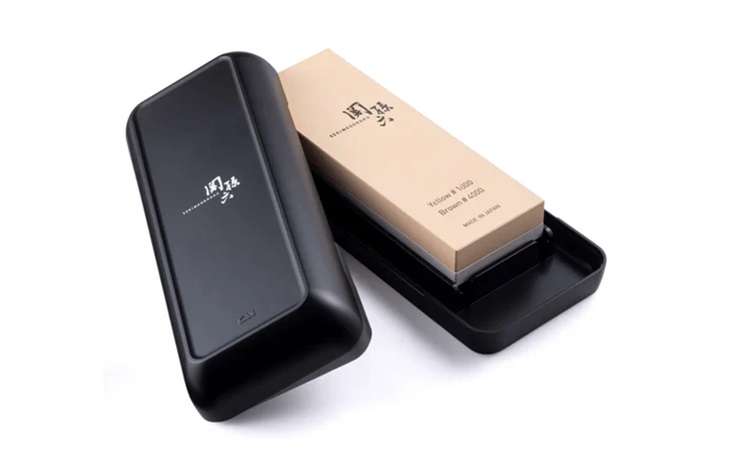
A Kai Seki Magoroku whetstone combo for knife-sharpening. Photo / Supplied
Many homeowners assume sharp knives are dangerous, but van Niekerk says the opposite is true. “Sharp knives work better, and they’re much safer to use. A blunt knife slips more because you’re forcing it.”
With proper care, most knives only need professional sharpening about once a year, maintaining the edge in between with a ceramic honing rod every few months. Many people also recommend diamond sharpening steels, like this one from the Homestore.
Van Niekerk’s preferred method is sharpening with a Japanese whetstone. “It’s the best way to maintain your blade.”
A progression of stones from around 200 grit through to 8000–10,000 grit works well, with a leather strop helping remove burrs during sharpening.
The Homestore also stocks a range of whetstones.
He cautions against pull-through sharpeners, which can damage blades over time, and urges people to steer clear of anyone offering to sharpen knives with angle grinders or high-speed belts.
Heating the blade edge too much can take it back to an annealed state and make it soft and permanently blunt, he says.
Van Niekerk’s rules for knife care
- Always hand-wash and dry immediately
- Never leave knives soaking in the sink
- Store safely on a magnetic rack, block or drawer
- Use wooden or soft plastic chopping boards only
- And, finally, the rule he stresses most: “Never put your knife in the dishwasher. It damages the handle, blunts the blade and shortens its life every time.”