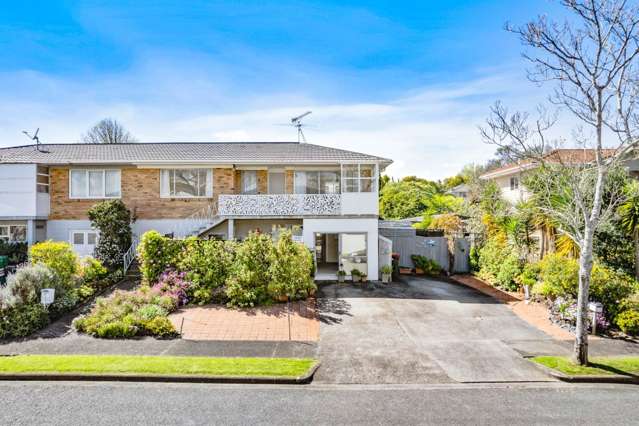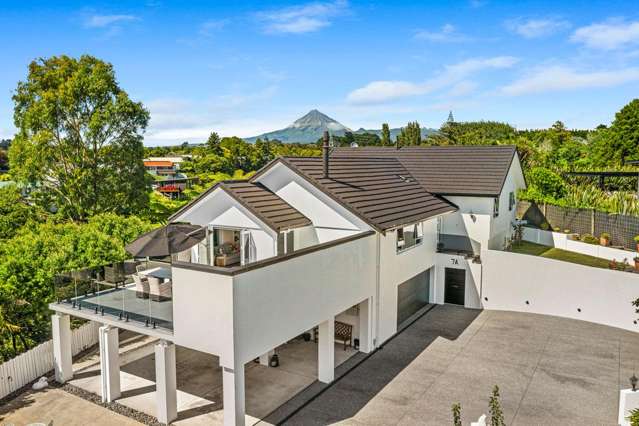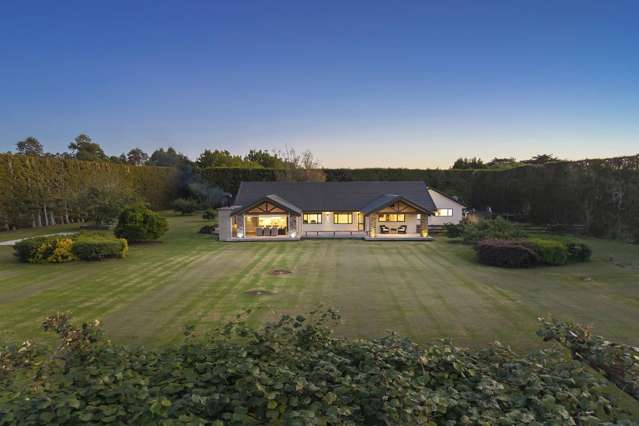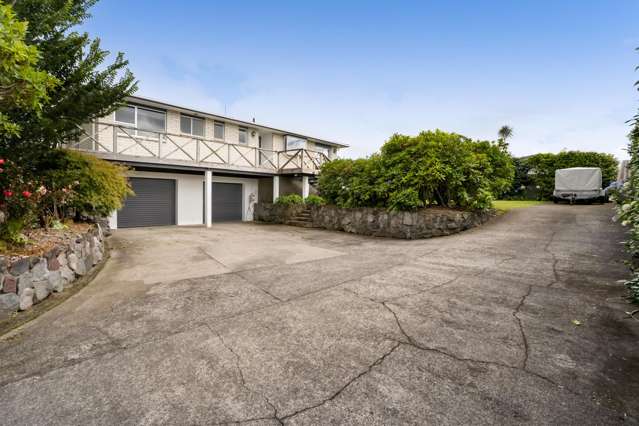
The Government’s softening of the foreign buyers ban, which passed under urgency at the end of last week, now allows overseas investors to purchase residential property in New Zealand.
The timing of the legislation for the much-awaited changes to the Overseas Investment Act, progressed through Parliament by Associate Finance Minister David Seymour and Immigration Minister Erica Stanford, took the real estate industry by surprise.
Some details still need to be worked out before so-called “golden visa” holders can buy or build a home worth $5 million or more, but this is what we know so far about the changes.
Has the foreign buyer ban been reversed?
Start your property search
No.
Foreigners have faced tight buying restrictions since 2018, when the Labour-New Zealand First coalition government pushed through legislative changes aimed at curbing house price rises driven by wealthy foreign investors.
Since 2018, the only overseas groups able to freely buy houses in New Zealand have been Australians and Singaporeans. All other foreign buyers have to receive approval from the Overseas Investment Office.
However, the changes to the Overseas Investment Act passed last Friday night give holders of the Active Investor Plus (AIP) residency visa, popularly known as the golden visa, the right to buy or build one New Zealand residential property worth $5m and more.
Visa holders still have to pass a good character test and submit their house-buying plans to the Overseas Investment Office.
When will visa holders be able to purchase or build a New Zealand home?
The urgent passing of the Government’s Overseas Investment (National Interest Test and Other Matters) Amendment Act on Friday does not immediately grant visa holders the right to buy.
The bill does not become law until it has achieved Royal Assent, signed by the Governor-General, and it is unknown at this stage when that will take place.
According to a guidance statement issued by Toitū Te Whenua Land Information New Zealand (LINZ) this week, the changes will come into force in “early 2026”. A default commencement date is stated in the bill’s amendments as four months after Royal Assent.
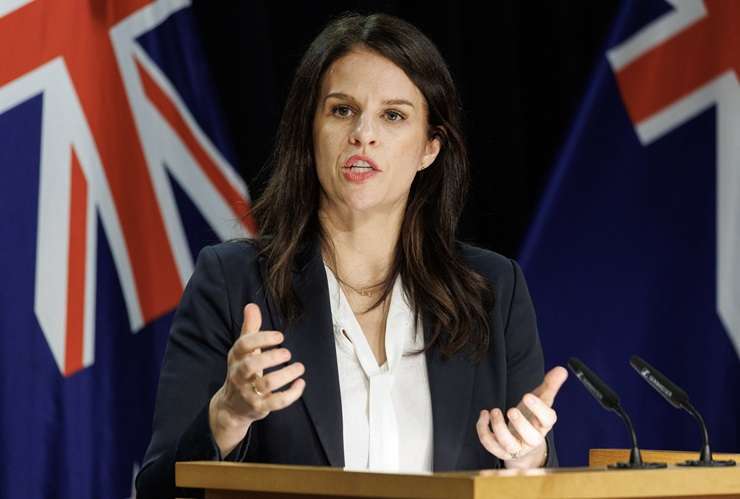
Immigration Minister says the new visa will benefit New Zealand. Photo / Mark Mitchell
Queen City Law managing director Marcus Beveridge, whose firm has processed 50 AIP applications, told OneRoof that getting the regulations changed to allow investors to buy homes had been a “slow boat to China”.
“This should have been done by lunchtime, months ago,” he said, adding that his firm was already helping clients make conditional offers on properties, subject to getting their visa and the law changing.
However, he noted, some vendors were not happy with waiting, pointing to a $10m contract he had put together with a client with this clause that was rejected in November.
“Our advice is to get your golden visa in your pocket ... and then be in a position of strength to negotiate.”
How do foreign buyers obtain an AIP visa?
Investors need to meet the strict conditions of the AIP visa.
There are two investment categories under which they can get the visa. The Growth Category deals with higher-risk investments, including managed funds and direct investments in New Zealand businesses, and requires a minimum investment of $5m over three years. The Balanced Category deals with lower-risk mixed investments and requires a minimum investment of $10m over five years.
To buy or build a New Zealand house, they must have at least another $5m in the bank.
As well as having funds liquid enough to transfer to New Zealand within six months of being approved, investors need to prove they are of good character (which includes a police certificate), undergo a medical exam and chest X-Ray to prove they are in good health and have no fraud or dishonesty convictions.
An application generally takes about four months to process and costs $27,470, according to the Immigration New Zealand website.
Who has applied for the new visa?
So far, over 1500 foreigners have applied for the visa since it became available in April, including 524 from the US, 267 from China, 195 from Hong Kong and 139 from Germany. Only 18 people from the UK have applied.
The Immigration New Zealand website said that 353 applications have been approved in principle – 64 in the Balanced Category and 289 in the Growth Category – and that 133 applications are being assessed.
How will visa holders buy property in New Zealand?
Visa holders will still need to get consent from the Overseas Investment Office before they can sign a sale and purchase agreement or bid at auction, but this should generally take only five days. LINZ said investors can make an offer conditional on getting their consent (and, as always, urged buyers to seek legal advice before signing anything).
Buying land to build a new house is more labour intensive. Visa holders have to provide updates on the build process and costs, and if the building is not completed or the final costs fall short of $5m, LINZ can compel the owners to sell the land.

Queenstown-Lakes is home to some of the most expensive residential properties in New Zealand and is likely to be a focus of golden visa holders. Photo / Getty Images
It is not clear what time period, if any, buyers have to complete their new house build.
Application fees for an existing house are set at $2040, and $3500 for a building project.
Visa holders also need to spend at least 21 days in New Zealand over three years (for $5m investors) or 105 days over five years (for $10m investors), although these times can be reduced for every additional $1m invested.
How many properties can an AIP holder buy?
Investors, whether personally or through a company or trust, can buy only one property under the rules, and will have to notify the Overseas Investment Office once they have made a purchase.
“To buy a property under these rules, any other property bought under these rules must first be sold,” LINZ noted in its guidance this week, adding the above did not apply to those who bought New Zealand property under different rules or did not need consent under the Overseas Investment Act.
Buyers can live in the house, use it as a holiday home or operate a business from it, but the act of buying a $5m-plus house is not considered a suitable investment for the investor visa application.
Are there any restrictions on the sort of properties foreigners can buy?
While foreign buyers can pick up a lifestyle or residential property (as defined by the local council’s valuation roll), they can’t buy sensitive land such as properties over 5ha, those adjoining the seabed or foreshore and some land on islands, without approval from the Overseas Investment Office.
The Act states that the purchase cannot be “contrary to New Zealand’s national interest”.
New Zealand Sotheby’s International Realty managing director Mark Harris said the details around sensitive land were still unclear.
“Residential property in suburbia will be accessible. There will still be plenty of choice,” he said. “Waiheke may need to be considered because it is an island. It will be an interesting one to see how that is determined.”
Who decides a house is worth $5m?
Queen City Law lawyers told OneRoof that while the property’s “agreed upon” purchase price must be $5m or more, neither the Bill nor the Amendments go further into how this is valued.
A LINZ spokesperson confirmed that the new home-buying rules for visa holders were still being developed, and that the details would be published before the end of the year and ahead of the new rules coming into effect.
LINZ told OneRoof that the purchase price was for the land itself, along with any improvements on the land. It did not include chattels.

Hamish Walker, of Walker & Co, says only idiots will try to break the rules. Photo / Supplied
LINZ also confirmed that two titles could be joined to create one property worth $5m or more. But two neighbouring properties, where one is lived in by the owner and the other rented out, could not be classed as one property.
The LINZ spokesperson said it anticipated most properties would consist of only one title, and whether it was accurately being portrayed as one property would be assessed as part of the consent process.
Hamish Walker, of Walker & Co, said it was unlikely that the “valid” value of a property in a sales and purchase agreement would be manipulated by an investor to squeak over the $5m minimum. “I just can’t see that happening. These rules are for good reason, and I just can’t see anyone trying to get around the rules.
“If they’re trying that, they’re just idiots.”
Will New Zealand house prices rise as a result of the changes?
The Government said no and that less than 1% of houses in New Zealand would meet the $5m threshold for purchase by foreigners.
The analysis also showed just how small the prestige market is in New Zealand when it comes to sales. Last year, just 0.2% of homes sold were in the $5m-plus bracket. Even at market peak, $5m-plus sales represented just 0.4% of total sales.
Walker said interest in New Zealand property from overseas had been growing. “It does help put confidence in the market, and it pulls everyone up.”
He said the changes would have flow-on effects to the rest of the market.
Harris said that buyer interest had picked up dramatically since the changes were announced earlier this year. “We’re working with current AIP holders who are considering making offers conditional on this rule being legalised,” he said.
“Clients are planning to go through the application and are starting to look at properties to get a feeling of what’s what with the market.”
The New Zealand Herald reported this week that a Treasury paper produced for Cabinet on the rule changes stated the visa’s impact on the housing market would be minimal. About 0.53% of the country’s housing stock is being valued at or above $5m, it said.
“This small proportion of the housing market can be expected to experience a small and temporary uplift in prices following the changes coming into effect,” officials said.
It could be “geographically concentrated”, primarily around Queenstown and Auckland, while houses valued “somewhat below $5m could also see a slight uplift in prices – where values are bid up to form part of the qualifying subset”.
The Treasury concluded that there was “unlikely” to be a substantial impact on house prices, noting that the drivers of the market - interest rates, housing supply and tax settings - would not be affected by the changes.
Where will foreigners look to buy property?
According to analysis by OneRoof’s data partner, Valocity, the majority of New Zealand’s $5m-plus homes is in Auckland (4479) and Queenstown-Lakes (1213).
The analysis also showed just how small the prestige market is in New Zealand when it comes to sales. Last year, just 0.2% of homes sold were in the $5m-plus bracket. Even at market peak, $5m-plus sales represented just 0.4% of total sales.
Of the 31 suburbs with more than 50 homes in the higher price range, just three are outside Auckland and Queenstown-Lakes: Mount Maunganui, in Tauranga (204); Whangamata, in Thames-Coromandel (89); and Merivale, in Christchurch (54).
“All the suburbs are where you’d expect them to be and highlight just how popular the coast is in New Zealand. Most of the suburbs on the list are within touching distance of water,” Valocity senior research analyst Wayne Shum told OneRoof.
The suburb with by far the greatest concentration of $5m-plus homes is Remuera, in Auckland. The Valocity research identified 1056 high-value houses in the wealthy inner-city enclave, more than 700 compared with the suburb with the next highest tally, neighbouring Parnell.
Both of these suburbs are prized by upper-end buyers for the luxury homes they offer, but they are also a magnet for Aucklanders looking to get their children into two of the country’s top schools, Auckland Grammar and Epsom Girls Grammar.
- Click here to find properties for sale