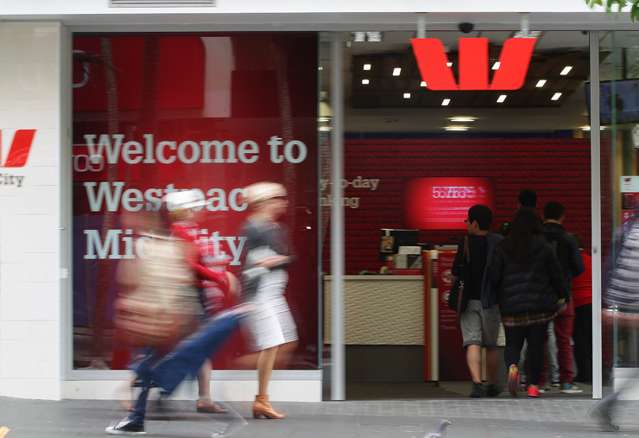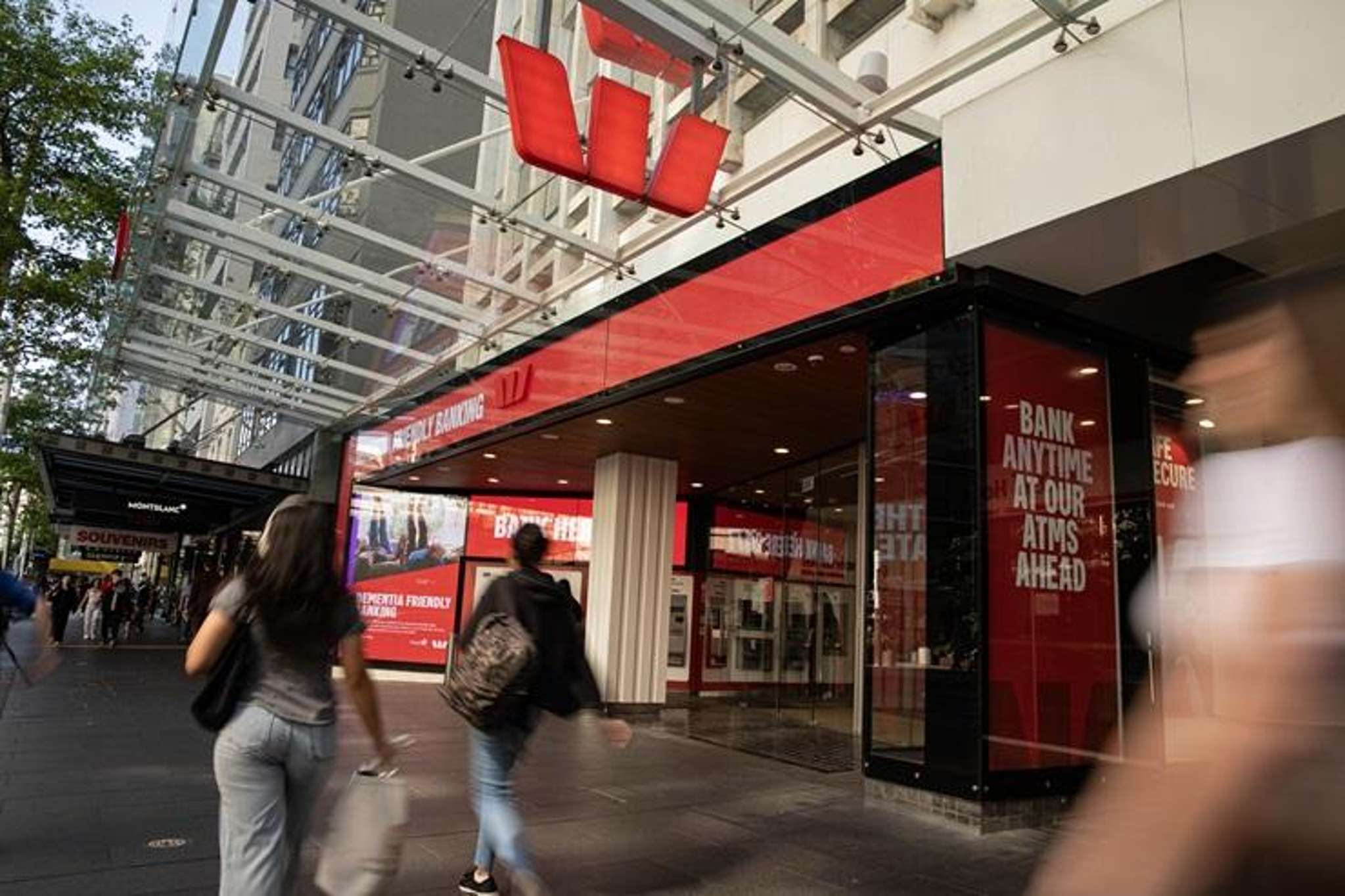
- Westpac raised its longer-term rates by 30 basis points, ending an 18-month decline.
- Finance Minister Nicola Willis urged consumers to make banks compete for better rates.
- Mortgage brokers noted banks remain competitive on cashback deals despite the rate hikes.
New Zealand's 18-month run of falling interest rates came to a shuddering end this week when one of the country's largest lenders hiked its longer-term rates by 30 basis points.
Start your property search
Westpac's about-turn on cheaper home loans, in response to rising borrowing costs, was swiftly followed by a rate hike at Co-operative Bank and a quiet stop to mortgage discounts at ASB.
The political reaction to Westpac's moves, less than two weeks after the Reserve Bank cut the official cash rate 25 basis points to 2.25%, was fierce, with Finance Minister Nicola Willis urging New Zealanders to hold their "bank's feet to the fire".
"See if another bank will give you a better rate and make them compete with each other. Don’t just accept that you’re getting the best deal right now. Let’s make them compete.”
The New Zealand Herald reported claims by the head of the country’s largest mortgage broking group that the banks were putting profits before the economy and could afford to absorb the increases in wholesale rates.
Mortgage brokers OneRoof spoke to this week said the banks were still competitive on cashback deals and would negotiate better deals behind the scenes, noting that Westbank was still offering a five-year rate of 4.99% to those who ask for it, despite increasing its advertised special five-year rate to 5.29% and its standard rate to 5.89%. (BNZ is the only major bank advertising a five-year standard rate of 4.99%.)
Discover more:
- Tony Alexander: That five-year mortgage rate of 4.99% will disappear any day now
- Clifftop mega-home hits the market - ‘this is $32m all day long’
- Hollywood stars hot for Waiheke's 'Cold War bolthole' and the NDAs are flying
However, they felt that those competitive deals might not be around for long.
GV Financial Services director Gareth Veale told OneRoof that banks often put out a discounted card rate that brokers could offer clients, which was usually below the rate that customers might get when negotiating with the bank directly.
“While they’ve [Westpac] increased it in their advertised rates, their negotiated rates are still where they were [4.99% for five years]. So, they are kind of just resetting those rates, potentially for further increases. [In the short-term] it’s not going to have an actual effect so much for people refixing – they should be refixing on the same rates.”
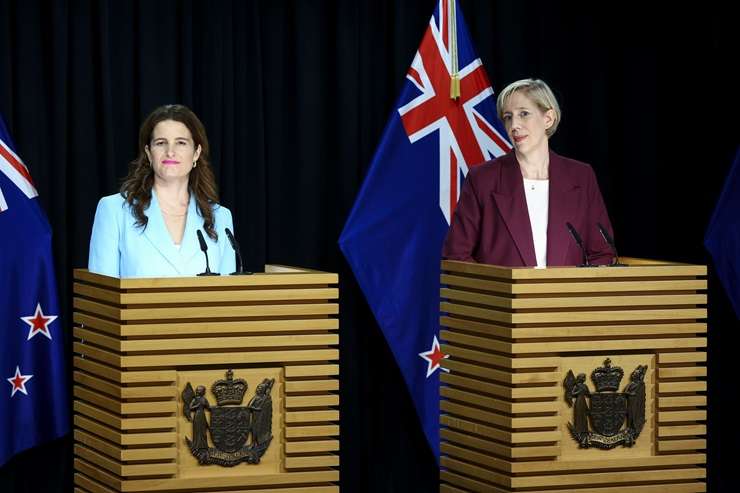
Finance Minister Nicola Willis, left, with new RBNZ Governor Dr Anna Breman. Willis has urged New Zealanders to hold their "bank's feet to the fire". Photo / Getty Images
Veale said that any movement in rates in the next few months would likely only be very small, if at all, and nothing for people to worry too much about.
Loan Market financial adviser Cameron Marcroft agreed that banks were often prepared to negotiate on the advertised rates, but noted that Westpac's move might encourage others. “The interesting part will be seeing what the other banks do. Whether they sit on this for a little bit of a land grab or whether they follow suit.”
Both Marcroft and Veale had not seen a huge number of clients lock in for the longer-term rates yet, but said it was something people should start to consider especially if they wanted certainty. Veale was a fan of the 4.75% year rate at three years, while Marcroft would consider a longer four- or five-year rate.
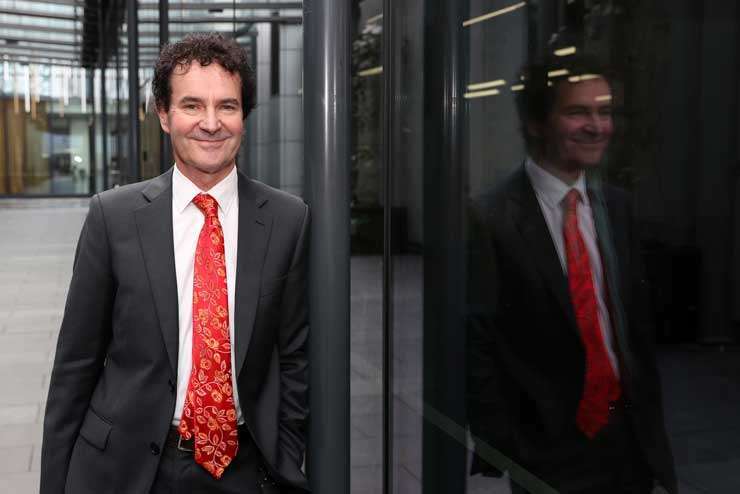
Independent economist Tony Alexander: “I still don’t think they will increase the rate until 2027, but as the Governor [of the Reserve Bank] just said, these are uncertain times we live in, and anything is possible." Photo / Fiona Goodall
Marcroft added: “I think it's a good rate to consider in this market at the moment, where we feel like the cycle is at the bottom, and so therefore why wouldn’t you grab a long-term rate while they are at the bottom?”
Independent economist and OneRoof columnist Tony Alexander said he was a fan of longer-term rates and said that’s what he would look at if he were borrowing right now.
Alexander said those waiting for the interest rates to hit the bottom had already missed the boat, adding that he actually expected the next move to be up.
“We are past the low point in the interest rate cycle. The wholesale interest rates – the cost the banks are borrowing to lend fixed – bottomed out in about the third week of October, and they’ve gone up since then about .5% or so.”
However, Alexander expected the Official Cash Rate to remain at 2.25% for at least the next 12 months and did not expect any major changes in interest rates during that time.
“My view is the cash rate has bottomed out at 2.25% - that it is too low and the Reserve Bank is going to eventually realise it’s too low and will start increasing interest rates,” he said.
“I still don’t think they will increase the rate until 2027, but as the Governor [of the Reserve Bank of New Zealand] just said, these are uncertain times we live in, and anything is possible."
OneRoof contacted Westpac for comment. The bank had not replied at the time of publication.
- Click here to find properties for sale