ANALYSIS: Last week, I wrote an explainer about why cuts in the Reserve Bank’s Official Cash Rate do not necessarily lead to reductions in fixed mortgage rates when we approach the expected bottom of the monetary policy cycle. I noted, for instance, that since the cash rate was cut from 3% on October 8, there had been for banks a 0.15% rise in the cost of borrowing at a fixed rate in the wholesale market for two years. That increase is now closer to 0.5% and rises in fixed mortgage rates look imminent.
A combination of factors has produced the 0.5% rise in most fixed wholesale borrowing costs over a time when the Official Cash Rate has declined 0.75%. Key amongst them is the simple expectation that no further cuts in the cash rate will come this cycle and that the next move will be upwards.
Another factor is the strong shift in Australian monetary policy forecasts from predictions of rate cuts to predictions of rate rises, in response to a stronger-than-expected economy and higher-than-expected inflation. In Europe, the inflation outlook is also becoming less benign, and market expectations are now for a rate rise from the European Central Bank.
Start your property search
In the United States, things are complicated by the new political interference, and it looks like what is generally happening there is becoming less of a determinant of what happens in the rest of the world. So, if the Federal Reserve cuts the US cash rate, there may be little positive reaction in other markets.
Discover more:
- Tony Alexander: Why the banks are not passing on the OCR cut in full
- New pet rules kick in: What renters and landlords need to know
- Ex-TV weatherman: I sold my plane, and now I'm selling my dream home
A further factor in play here in New Zealand is the growing list of indicators showing that the economy is turning around and that 2026 will likely be a year of good growth, including in the labour market.
How much might banks’ fixed mortgage rates rise? That depends on competitive pressures and where banks want to try and attract new business and retain existing customers. The two-year wholesale borrowing rate is around 3.04%. The last time the rate was at this level was early August.
Back then, the best two-year fixed mortgage rate available from the main lenders was 4.95%. Currently, the best published main bank rate is 4.45%. Does this mean a 0.5% jump is imminent? Probably not. But a 0.25% rise could easily occur.
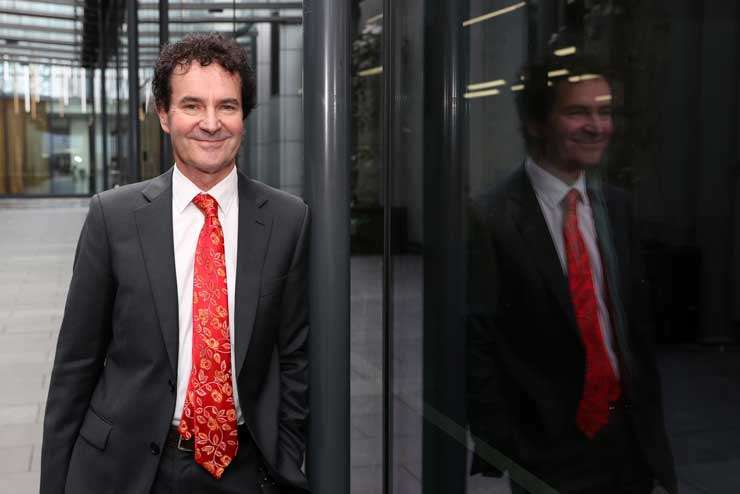
Independent economist Tony Alexander: "2026 will likely be a year of good growth, including in the labour market." Photo / Fiona Goodall
Similarly, the best five-year rate of 4.99% could disappear any day.
Will these coming rate rises dent the economic upturn? Not by much in the short-term, as a lot of borrowers have yet to roll off higher fixed rates they signed up to maybe a year ago. Plus, most people these days are fixing for just one year, and only minimal pressure exists for rate rises at this term.
So, once the fixed rates do kick up, the prospects for good economic recovery through 2026 and 2027 won’t be all that much affected.
Speaking of which, I have just completed my last monthly consumer Spending Plans survey for 2025, and the results show that a net 20% intend to buy more stuff in the next three months. This is up slightly from a net 18% a month ago and well away from the -19% of April. Prospects are looking better for retailers.
- Tony Alexander is an independent economics commentator. Additional commentary from him can be found at www.tonyalexander.nz