- Agents in Australia must reveal reserve prices a week before auctions to combat underquoting.
- New Zealand is unlikely to adopt similar rules, with focus on housing supply issues.
- Reactions are mixed; some say it improves transparency, others fear it disadvantages sellers.
Agents and sellers in Australia will be compelled to reveal their reserve prices at least a week before going to auction as part of a crackdown on underquoting in the country’s housing market.
Start your property search
However, New Zealand home buyers are unlikely to see anything similar, with agents and politicians pushing back on the need for drastic legislation in this country.
Plans to introduce new rules for auctions and set sales in Victoria next year have caused uproar in Australia’s real estate industry and follow moves by the NSW Government to mandate price guides on all property advertising and fine agents found guilty of trying to game the system up to A$110,000.
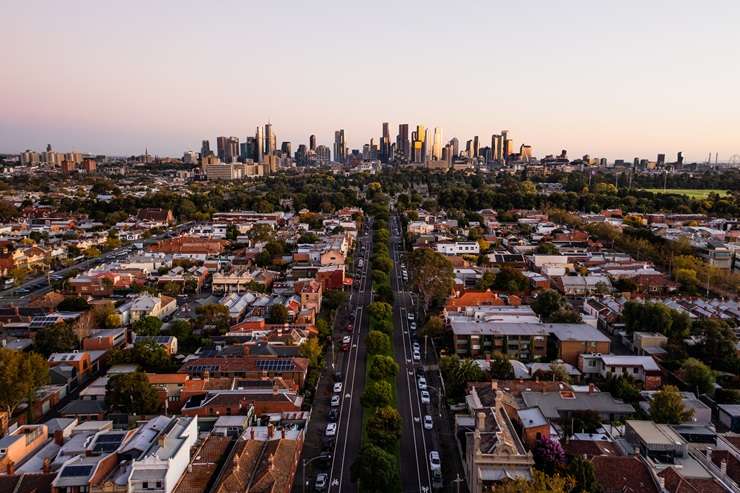
Auctions are the dominant method of sale in Melbourne. Photo / Getty Images
The crackdown is in response to media investigations that uncovered widespread underquoting in the Australian market, in which agents advertise a home for less than the estimated selling price to attract more buyers.
Asked by OneRoof if the New Zealand Government would consider introducing similar legislation, Housing Minister Chris Bishop said: “This is not something on our radar as most houses in New Zealand are not bought and sold via auction.
“Our focus is on fixing the fundamentals of the housing market. You can have as many rules as you like about property sales, but the only real fix for affordability is dealing with the fundamentals - i.e. supply.”
Discover more:
- Top lawyer's foreign buyer warning: Offers of luxury cars and boats could end in trouble
- Shortland Street's bad boy Ido Drent: Why he swapped TV soaps for affordable housing
- Wanaka couple buy decrepit bach for $335,000 as crowds descend on Great Barrier Island
Labour, which is planning to introduce a capital gains tax to improve housing affordability in New Zealand, expressed interest in the Victorian Labor government’s approach.
“This isn’t something we have considered as a caucus, but I am interested to see how it is implemented in Victoria,” housing spokesman Kieran McAnulty told OneRoof.
Nick Goodall, head of research at property insights firm Cotality NZ, welcomed the Australian response, saying it was “a win for transparency”. He believed publishing auction reserves would help set realistic expectations on price, “which can only be a good thing for prospective buyers, especially inexperienced first-home buyers going into the unknown”.
“Vendors and some real estate agents may feel frustrated when it’s first introduced, but I think they’ll quickly adjust to the new norm, with it just becoming part of the process,” he said.

New Zealand Housing Minister Chris Bishop with Finance Minister Nicola Willis earlier this year. He told OneRoof the Government was focused on fixing supply issues to address affordability in the country. Photo / Getty Images
Auction sales in New Zealand in October totalled 1310 nationally, 17.5% of all sales for the month, according to the latest data from the Real Estate Institute of New Zealand. Auckland continues to be the country's auction capital, with sales under the hammer in October representing 29.2% of all sales in the city for the month.
Tom Rawson, co-owner of Ray White Manukau, Mangere, Mangere Bridge and Manurewa, thought Victoria’s legislation defeated the purpose of an auction, which is a public process so everyone knows what the bids are.
He thought more sales by private treaty might be a consequence of the change, noted that the method of sale was less transparent and could result in buyers missing out for the sake of an extra $100.
“We get a lot of complaints every year around these multi-offer scenarios, which is effectively what an auction is, but behind closed doors.
“An auction is multiple people bidding for it at the same time – a multi-offer is multiple people fighting for it at the same time, but they don’t get to see what the other one paid.”

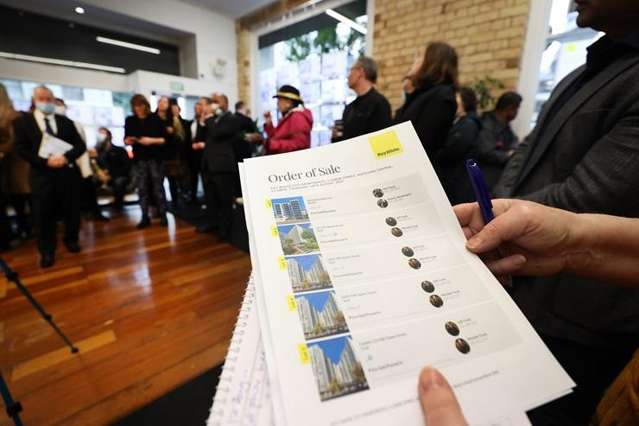
Bidders at a Ray White Manukau auction in 2023. The office’s co-owner defended auctions as the most transparent method of sale for buyers and sellers. Photo / Fiona Goodall
Rawson said an area that could be tightened up in New Zealand was around people spending a lot of money doing due diligence on a property beyond their reach, which he thought seemed to be Australia’s biggest issue.
“People are thinking they can buy for $1m and then it sells for $1.3m.”
He said the issue was not an easy one to resolve. “Obviously, everyone wants to buy for as little as possible and sell for as much as possible, and that’s just a conundrum we have.
“It’s funny because when you’re selling you want a big crowd of people to turn up and everyone to fight for your property and when you’re buying, you want no one to turn up and for you to be the only one there.”
New Zealand auctions tended to work well, he said, with about half of sales in his branches being by auction, meaning New Zealand might have more selection of properties available for people who were conditional buyers as opposed to cash buyers at auctions.
“Maybe we are different in that regard to Australia, and we don’t need to have ludicrous rules brought in where owners have to tell people what the reserve is a week out from the auction. In New Zealand, right up until the fall of the hammer, they can change the reserve, and often do.”
Rawson said one client even dropped their reserve of $2m by $1m on the day of the auction: “We would be so far out of whack if we had advertised at a $2m reserve a week before – no one would turn up. The ability in New Zealand to be flexible is great.”
Reaction to Victoria’s legislation in Australia has been varied. Some are saying the changes would bring transparency and save people time and angst, but the Herald Sun newspaper quoted a Melbourne academic attacking the plans.
RMIT’s Dr Peyman Khezr told the paper that the legislation would end up costing sellers money and do nothing to address underquoting.
Cotality’s head of research in Australia, Eliza Owen, told OneRoof Melbourne was the most common city for house sales by auction, with auction listings representing about 40% of new listings since 2008.
But it was hard to say statistically how much of an issue underquoting was, she said.
“In late 2022, a taskforce was established to mitigate the practice and has seen around 5000 complaints, but between the end of 2022 and November 2025, there have been around 348,000 sales across Victoria.”
Five thousand complaints was still a substantial number, but the issue was obfuscated by market movements.
“In a downswing sale prices are more likely to be less than the advertised price, and in an upswing properties often sell for more.”
Cotality anticipated Victoria’s move would help increase market transparency, however, and Owen said Australian auction campaigns typically lasted four weeks, so the agent and vendor should have enough time to settle on a reserve price seven days before the auction.
“However, it may place some vendors at more of a disadvantage if key market information shifts within the seven-day period of the auction, such as a decision around interest rates, or comparable sales.”
- Click here to find properties for sale