- Economists doubt Labour’s proposed capital gains tax will improve housing affordability or raise expected revenue.
- The tax would apply from July 2027, excluding family homes and farms, if Labour wins.
- Experts warn it might not curb house price growth and could lead investors to sell properties.
Economists and property experts have poured cold water on Labour’s proposed capital gains tax, telling OneRoof that some property owners might sell up before it comes in.
Start your property search
They also questioned the amount Labour planned to raise from the new tax or the party’s assertion that it would improve housing affordability.
The Opposition Party yesterday announced it would tax gains from property sales at 28% to help fund free doctor visits for Kiwis. The policy, which excludes family homes and farms, would become law from July 2027 if Labour won power at next year’s general election and would not be applied retrospectively.
Labour’s forecasts showed revenue would start low at $100m in the first year (2027/28) before rising to $385m in the second and $969m in the third.
The total number of residential properties that could be affected by Labour’s planned tax is hard to gauge, but, according to market analysis by OneRoof data partner Valocity, there are roughly just over half a million properties that are either investments or secondary homes in New Zealand – about 29% of the market.
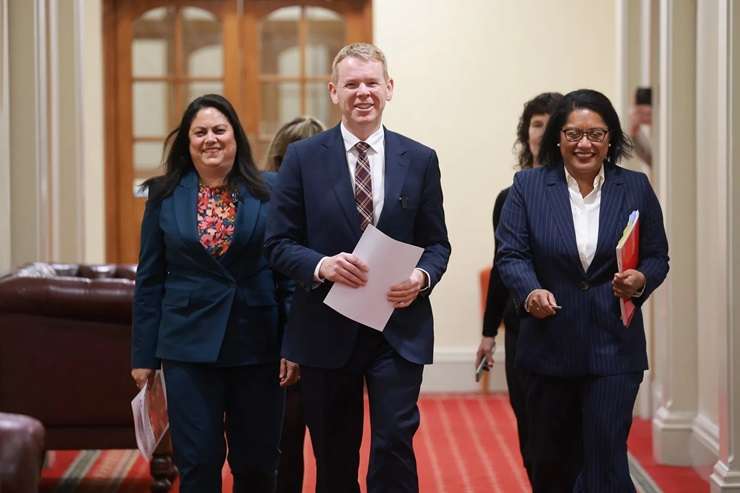
Labour leader Chris Hipkins, centre, says the policy is the "most progressive change" to tax in a generation. Photo / Mark Mitchell
Valocity also pegged the total value of investor purchases in 2024 at $33 billion for residential, and $6.4b for commercial and industrial over the same year, noting that the investor market had improved slightly in 2025, compared to the previous year.
When asked yesterday what impact Labour’s tax plans would have on the housing market, the party’s finance and economy spokesperson, Barbara Edmonds, said she expected “downward pressure” – a hint that Labour expects the policy to improve housing affordability.
Cotality chief economist Kelvin Davidson, however, warned that CGTs overseas failed to put the brakes on house price growth and noted that investors might not play ball with the Government. “It can all get a bit circular because people might just change their ideas and not sell,” he told OneRoof.
Discover more:
- Former mayor selling his rare over-water bach in Northland
- Tony Alexander: OCR shock treatment - is it working?
- 'Oh my God': Crowds swamp open home for blue beachside cottage
Davidson said the announcement outlined how the tax system could be less favourable for property owners in the future. Rather than the policy generating a huge amount of money, it could be a way of disincentivising property investment and incentivising investment in other things such as shares or KiwiSaver, he said.
Ray White Manukau, Māngere, Māngere Bridge and Manurewa co-owner Tom Rawson said it seemed like a policy that was “out to get investors”. If Labour was elected, he expected to see some investors sell up to avoid paying capital gains tax.
Rawson said the Government should be prepared for capital losses too. “In the last three years, we’ve had losses on property – some of them massive. How do they intend to cover that off?
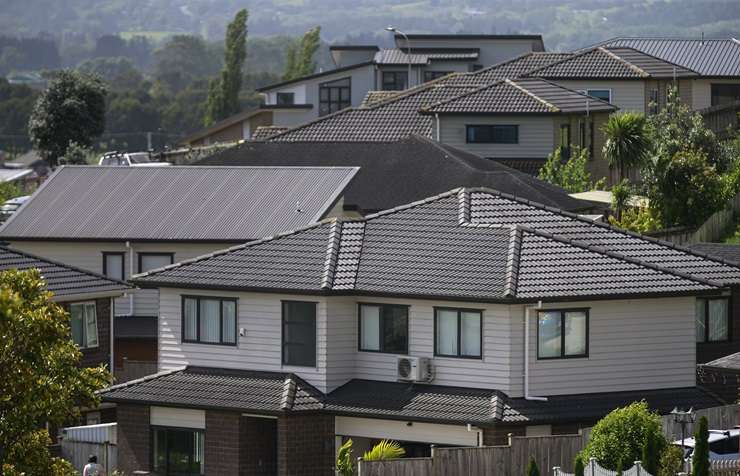
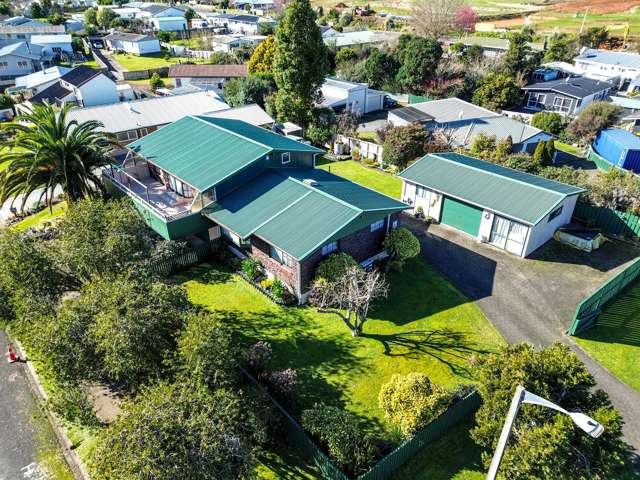
Around 29% of New Zealand’s housing stock could be affected by the CGT. Photo / New Zealand Herald
“You can’t have it both ways and say, ‘You’ve made a profit, give us some money’ or ‘You’ve made a loss, oh we aren’t going to give you any money’.
“I think the expected changes from a policy like this versus the reality will be an eye-opener to how tough it has been to be a property investor over the last little while.”
New Zealand Property Investors Federation PR and advocacy manager Matt Ball said Labour’s policy targeted property investors who were providing rental accommodation.
“Other businesses are fine, apparently, but if you want to provide a warm dry home for other people to live in, you must be punished. It doesn’t make sense. Surely, we want more homes for people to live in, not less?”
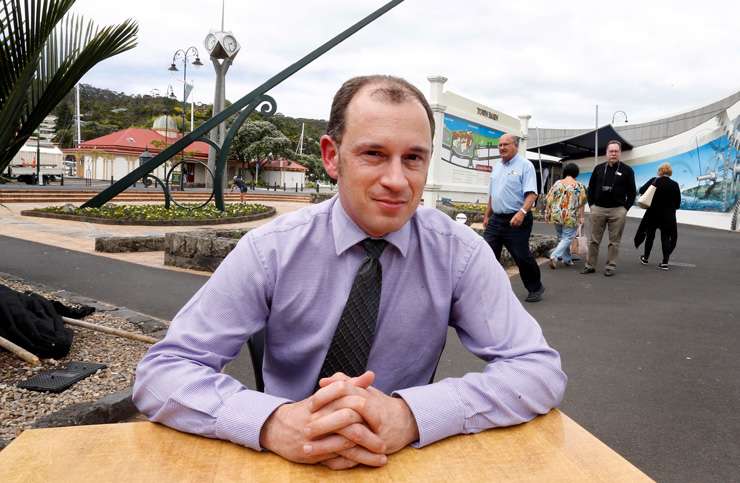
Infometrics chief forecaster Gareth Kiernan says having a CGT hanging over the housing market could dampen buyer demand. Photo / John Stone
Ball said a lot more details were needed because if it was a tax on speculation, then there should be support for property investors who were providing long-term rental stock. “We call on Labour to ensure the tax makes allowances for repairs, maintenance and upgrades, and inflation.”
Kiwibank chief economist Jarrod Kerr did not think the proposed policy would have a big impact on house prices. “I’m certainly not going to sit here and say this is the end of the world and house prices are going to fall another 20%. That’s not going to happen,” he said.
“The Australian experience [of CGT] is it didn’t do much at all.”
He added: “You have to make gains in order to be taxed and it will be interesting to know what you can kind of write-off.”
Infometrics chief forecaster Gareth Kiernan said Infometrics’ house price forecast was already “pretty conservative” for the next couple of years from both an owner-occupier point of view and income returns for investors. Policies like Labour's could further stifle demand, he said.
“I guess with that policy now sort of hanging over the housing market and given how close the political polls are at the moment, it’s probably the sort of thing that again just dampens any investor demand out there.”
If a capital gains tax was introduced, Kiernan said investors would be looking for a realignment of their rental yields if they were going to lose a significant chunk of the potential capital gains and the easiest way for that to recalibrate itself was for house prices to pull back so the rental yield was higher.
- Click here to find properties for sale