- House values rose in nearly 90% of South Island suburbs, with significant growth in Southland and Otago.
- North Island saw declines in half its suburbs, with Auckland experiencing a 1.1% drop in values.
- Dunedin led South Island growth at 4.2%, while Auckland’s market struggled with cost-of-living pressures.
House values are up in almost nine in 10 South Island suburbs, new OneRoof figures show.
Start your property search
The half-time score for the housing market in 2026 points to continued strength in Canterbury, Otago, Southland and West Coast, with house prices in each reaching new heights in the last six months.
But the OneRoof-Valocity House Value Index also shows a collapse of confidence in the North Island, where one in two suburbs suffered value declines.
Southland leads the country, with the average property value in the strong farming region rising by over 5% (+$30,000) to a new peak of $602,000.
West Coast’s average property value crossed the half-a-million-dollar mark for the first time on the back of a 4.5% (+$22,000) surge, while Otago’s average property value, bolstered by wealth in Queenstown-Lakes and affordable prices in Dunedin, jumped by 3.3% ($34,000) to $1.05 million.
Property value growth in Canterbury in 2026 wasn’t as strong as it had been in previous years, but a rise of 0.6% (+$5000) was still enough to take it to a new peak of $821,000 in May (it’s dipped by $4000 in the last month to $816,000).
At a major metro level, Dunedin has enjoyed the strongest house price growth of 2026, with the city’s average property value rising by 4.2% (+$28,000) to $691,000. However, it is losing momentum with growth in the second quarter a measly 0.7% (+$5000).
Invercargill’s average property enjoyed the next biggest leap: 3.6% (+$20,000) to a new high of $576,000. Like Dunedin, the city’s housing market has benefitted from the Fonterra payout and relatively lower house prices.
At the other end of the South Island’s housing market is Queenstown-Lakes. Its average property value hit a peak of $2.178m this month, on the back of 2.7% (+57,000) growth in the last three months, making up for a lacklustre start to the year.
Christchurch, the South Island’s biggest city, hasn’t performed as well as other major South Island markets, but unlike Auckland and Wellington, it has still managed to dodge the economic pain of the Iran War and rising inflation.
House price growth in the city was flat for the first three months of the year and then enjoyed a modest bump of 0.5% (+$4000) in the last three months. The city’s average property value did hit a high of $826,00 in May, but has since slipped to $819,000.
OneRoof’s analysis of the 277 South Island suburbs with 20 or more settled sales in the last 12 months found that property values in 240 (87% of the total) are higher now than they were at the start of the year. And just 32 suburbs (11%) saw value declines year-on-year.
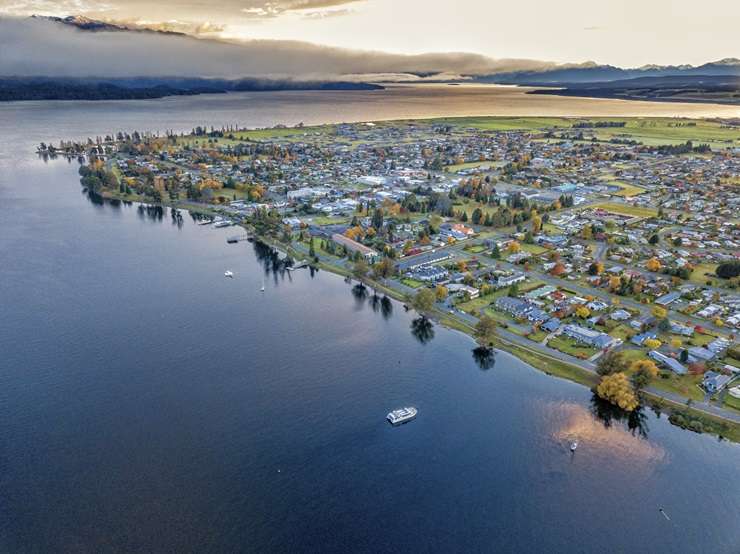
Homeowners in Te Anau enjoyed a bump of $86,000 in the first six months of this year. Photo / Getty images
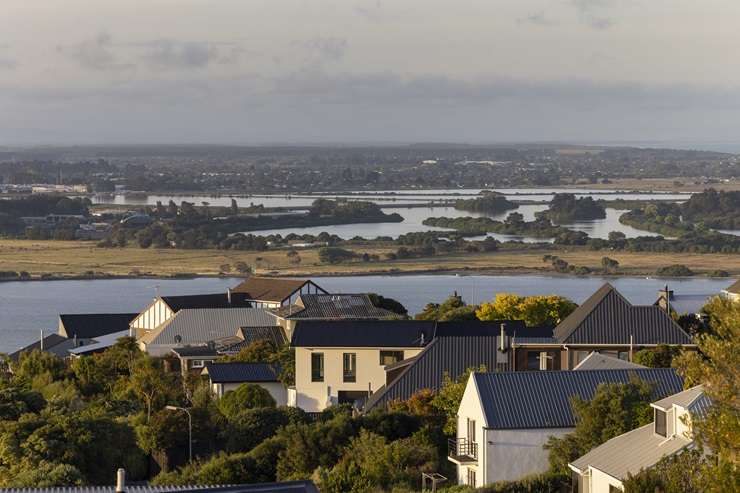
Mount Pleasant, in Christchurch. The city’s house values have managed to shrug off the economic woes affecting real estate in Auckland and Wellington. Photo / Peter Meecham
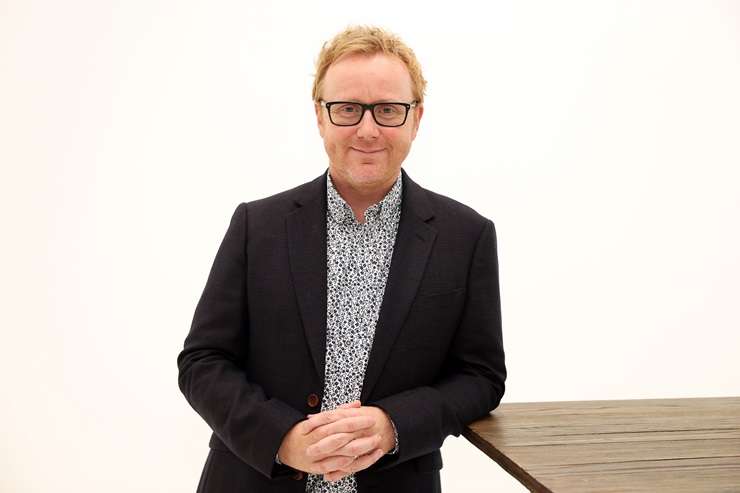
OneRoof editor Owen Vaughan: “Values in almost two-thirds of Auckland’s suburbs found themselves worse off in 2026.” Photo / Fiona Goodall
The analysis also identified 129 South Island suburbs where the average property value hit a peak in the last six months. Some home owners have made serious money, on paper at least. In Arrowtown, the average property value rose by $94,000 to $3.17m, while in Mount Pisa, the average property value rose by $87,000 to $1.57m.
Also benefitting from the extra farm money making its way through the South Island economy is Te Anau, with the average property value in the lakeside spot rising by $86,000 to $937,000. That’s a new peak, but it’s still relatively cheap compared to bach shopping in Queenstown-Lakes.
The OneRoof-Valocity figures also highlight the weaknesses in the North Island’s housing market.
The dead weight is Auckland, where the average property value at the end of June was 1.1% (-$14,000) lower than at the start of the year, and 2.5% (-$32,000) lower than last year.
The city’s housing market has been hit hard by cost-of-living pressures, a weak job market, and rising interest rates. Not helping is the abundance of listings; picky buyers have some 15,000-plus residential properties to choose from, and are in no hurry to commit.
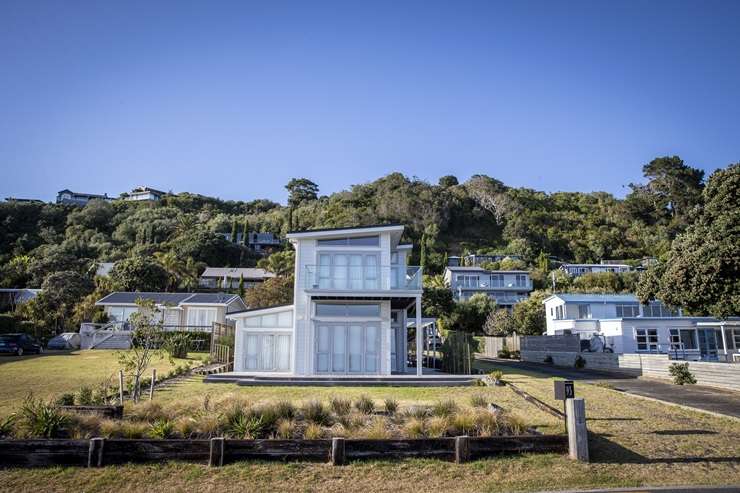
Auckland’s biggest money-makers of 2026 were in the Waiheke beach suburb of Onetangi. Photo / Michael Craig
Values in almost two-thirds of Auckland’s suburbs found themselves worse off in 2026, with the biggest declines in Waterview (-6.3%), Onehunga (-4.6%), and Point Chevalier (-4.4%), all the result of an influx of new townhouse and apartment builds.
Wellington, the North Island’s next-largest metro market, hasn’t fared as badly, with the average property value in the city dipping by less than 1% (-$4000) over the past six months.
However, values in the city are 1.5% (-$14,000) lower than a year ago, 7.1% (-$71,000) lower than two years ago, and 30% (-$406,000) off the value peak in early 2022.
Hamilton and Tauranga property values have also come under pressure in 2026, dropping by 0.7% (-$6000) and 0.4% (-$4000) respectively.
OneRoof’s analysis of the 630 North Island suburbs with 20 or more settled sales in the last 12 months found that property values had dropped in 331 in the last six months and 415 in the last year.
Just eight North Island suburbs hit new house price peaks in 2026, including the wealthy beach spots of Point Wells and Omaha, on Auckland’s northern fringe, and cheap-as-chips Murupara, in Whakatane, where the average property value is a low $221,000.
Murupara was also one of the North Island’s strongest performers in 2026, with its average property value rising by 5.7% (+$12,000). Also doing well were Onetangi, on Waiheke Island, up by 6.1% (+$121,000) to $2.09m; and Russell, in the Far North, up by 5.2% (+$80,000) to $1.6m.
- Click here to find properties for sale