Plummeting house prices and less competition have made it the best time in years for people to buy a home in Australia. So, with Aussies slamming the brakes on buying, is now the time for migrating Kiwis to swoop in?
Australia’s house prices have plunged 6.7% since the March peak, according to Cotality data released this week, and the speed of the decline in home values is tracking at the fastest pace in more than 40 years.
At the same time, the Reserve Bank of Australia has just hiked its cash rate to its highest level in 18 years as it tries to curb inflation.
Cotality Australia research director Tim Lawless said affordability and serviceability constraints were the earliest factors weighing on the country's housing demand.
Start your property search
“Buyers have a lot more stock to choose from, they have more leverage, and there isn’t the same urgency to buy as there was a year ago when home values were rising rapidly. But despite this being a buyer’s market, they are noticeably absent, reflecting low confidence and ongoing serviceability barriers.”
Independent economist Tony Alexander, who shares his time between New Zealand and Australia, said economists were largely in agreement that the falls were only part way through and still had more to go.
“Now would be a relatively unwise time to make a house purchase in Australia given the risk of house prices falling in the near future,” he said.
“You’d want to wait until the prices have stopped falling, which is of course why they are falling because people are waiting for them to stop falling.”
On top of that, the Kiwi dollar wouldn’t stretch far, he said, given it was at its lowest against the Australian dollar in more than a decade.
While there has been some commentary that the fall in house prices and rising inflation could make Kiwis think twice about moving across the ditch, Alexander disagreed.
“I don’t think that’s the primary motivation for most young Kiwis moving to Australia. It’s more just wages and looking at opportunities rather than relative house prices," he told OneRoof.
Discover more:
- ‘Dime-a-dozen’ townhouses: Buyers call the shots as developers race to the bottom
- Hospitality guru quits the rat race for $400k home in NZ's cheapest ski town
- Grand Designs NZ's cliffhanger house sells sight unseen to overseas buyer
“We’ve had these very strong outflows of young people to Australia in recent years when housing has been less affordable in Australia than in New Zealand. So relative house prices are not a driver of the migration. The driver of the migration between New Zealand and Australia isn’t the relative strength in the housing market. Not the housing market strength, not the housing market price movements – it’s the labour market that matters.”
Cotality chief economist Kelvin Davidson said just because house prices in Australia had dropped didn’t mean they were suddenly cheap.
Cotality's latest affordability measure for share of income required to service a mortgage in New Zealand was 37% (below its average of 39%), while Australia’s was 51% (above its average of 35%).
“The point is it’s still really expensive. Yes, it’s less expensive than it was six months ago when it was 54% or 55%, but it’s still a hell of a lot more expensive than here. They are coming down, but you definitely wouldn’t call it cheap,” he said.
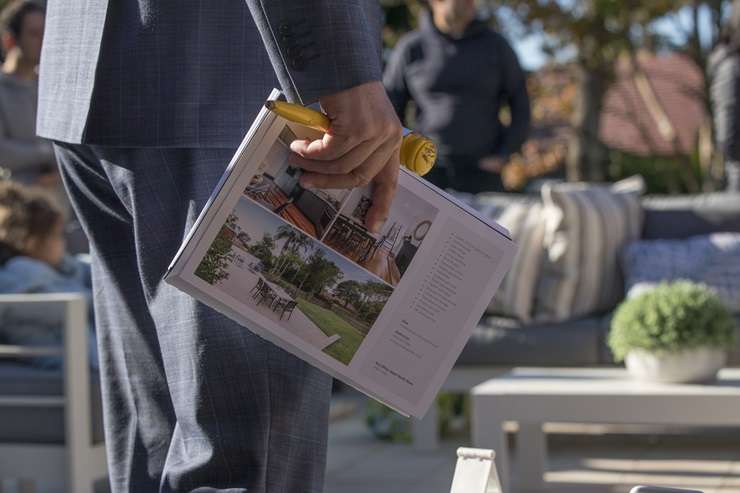
Australian auctions have been noticeably quieter since the downturn began. Photo / Getty Images
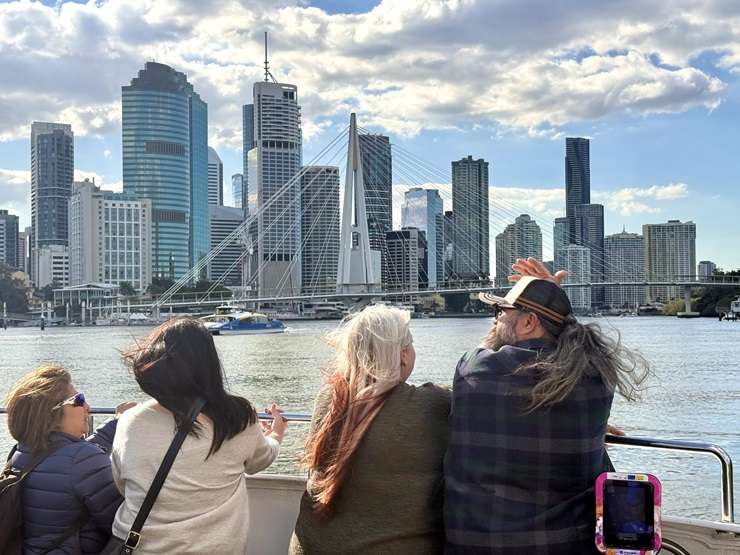
Brisbane house prices have suffered the country's steepest decline, with the median property value down 2% in October. Photo / Getty Images
“It [affordability] would have got better without the increased interest rates, but they’ve had an increase in interest rates, so they are pretty much still as unaffordable as ever.”
However, Davidson agreed with Alexander that people looking at ditching New Zealand for Australia were usually more focused on lifestyle and employment than housing.
And while its unemployment rate was starting to rise, it was coming from a relatively low level.
Mortgage Plus director Chris Dobson, a Kiwi is based in Sydney, said he’s telling his Kiwi clients to get ready, but not necessarily buy just yet because prices were still falling.
“Slow and steady wins the race. Take your time and pick value.”
He’s working with about eight Kiwi clients who have pre-approvals from the bank to buy and were going to open homes and doing their research. Some of those Kiwis had just moved over, and others had been there for a year.
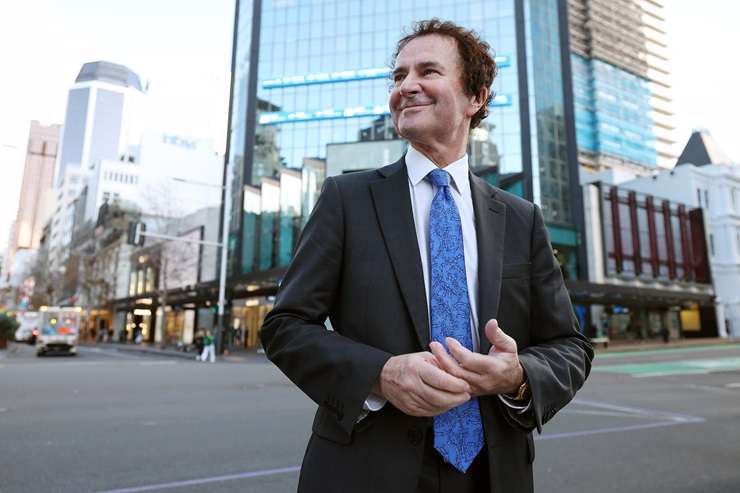
Independent economist Tony Alexander: “You’d want to wait until the prices have stopped falling." Photo / Fiona Goodall
“Sydney prices are going backwards about 1% a month, and I think we’re roughly halfway through the cycle. I tell clients to get organised and get pre-approved, but don’t rush. With rates expected to go up again, there’ll be more pressure on values and on repayments. The good news is less competition, so you can pick better properties.
However, Dobson said anyone thinking property in Australia was still cheap was wrong.
“Kiwis are still coming over for the work and the money, but the days of cheap housing here are over. Brisbane houses have gone up a lot and so has the cost of living.”
Another Kiwi to make the move over to Australia is Ray White AKG group chief executive Avi Khan.
Khan told OneRoof that for the first time in five years a Kiwi landing in Brisbane would not be chasing a market that was running away from them.
“Brisbane is down about 8% from the March peak and fell 2% in October alone - the biggest drop of any capital. The market has finally stopped to catch its breath. If you are buying a home to live in, the window is open.”

Ray White AKG group chief executive Avi Khan said it was the first time in five years that Kiwis wouldn't be competing in a rising housing market. Photo / Supplied
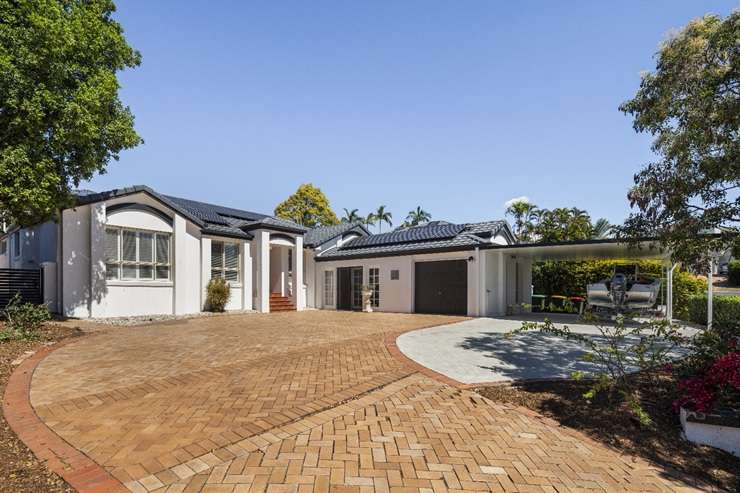
Family homes in Brisbane hover over the $1m mark. This five-bedroom property on Orbital Close, in Bridgeman Downs, fetched $1.215m under the hammer. Photo / Supplied
Khan believed Australia was still a very attractive proposition for New Zealanders.
“Kiwis have the best deal of any migrant on earth. No visa, a citizenship pathway, higher pay, and you are treated as a local buyer rather than a foreign one, so no foreign buyer surcharges. Everything is in your favour except rugby.”
He said a lot of the Kiwis they dealt with had given up on buying in Auckland; in Australia, they can buy a four-bedroom home with land for about A$750,000 to A$850,000.
But while prices were dropping, interest rates were rising, with the Reserve Bank of Australia hiking the cash rate last week to 4.85% to put a lid on inflation, which is currently sitting at 4.3%.
“The catch is rates. Prices are falling because the Reserve Bank keeps hiking, and it will probably hike again this week. Borrow with a buffer, not at the limit. Brisbane will not wait for you forever, but it will wait long enough for you to do the sums properly.”
Ray White ICON owner Sherrie Storor said nobody had a crystal ball to know exactly when the market would hit the bottom, and those who waited could miss it.
“No one really ever knows when it is the peak, and when it is the true bottom of the market. All we can really do is go off what is exactly happening in the market at any point in time. And what we do know right now is that buyer confidence is low, so we are seeing less-qualified buyers in the marketplace, we are seeing people making less commitment to buy, but we are seeing that people still want to sell.”
Storor said based on this it was an “incredible” time to buy.
“There’s never been a better time, really. If you look over the last couple of years, there’s been so much competition, which has of course driven up a lot of the pricing.
“Vendors do have an understanding now that the market has changed so their pricing expectations have certainly changed so you are definitely going to pick up a property at a different pricing level than what you would have previously.”
Houses in Brisbane would set someone back at least A$1m, with a five-bedroom, two-bathroom home in Orbital Close, Bridgeman Downs, selling under the hammer for A$1.215m last weekend. Meanwhile, apartments and entry-level units started from about A$700,000.
- Click here to find properties for sale in New Zealand