Five years ago, New Zealand’s housing market reached a significant milestone: the nationwide average property value hit $1 million for the first time.
Fuelled by record-low interest rates, Covid-era travel restrictions and intense competition among buyers, house prices surged at a pace that seemed unsustainable even at the time.
Within a year, values across the country had jumped 27%, creating fears that home ownership would become permanently out of reach for a generation of aspiring buyers.
Had that trajectory continued, the average New Zealand home would now be worth close to $3m, and first-home buyers in Auckland could be facing deposit requirements approaching $1m.
Start your property search
Instead, the market took a dramatically different turn.
New figures from OneRoof and its data partner Valocity show the nationwide average property value is now $954,000, down from $965,000 three months ago and 4.9% from five years ago.
After continuing to rise for several months beyond September 2021, values in most major centres entered a prolonged correction, with nationwide values falling 13% from their peak.
The latest data also reveals that property values have fallen over the past three months in all but three regions: Otago, Southland and the West Coast.
While the headline numbers suggest a market that has largely gone backwards over the past half-decade, a closer look reveals a striking regional divide. The South Island has emerged as the country’s strongest-performing housing market, while Auckland and Wellington remain firmly in the doldrums.
Million-dollar suburbs: Fewer overall, but wealth becoming more concentrated
Back in 2021, OneRoof reported that New Zealand had gone from having just one suburb with an average value above $1m to 353 such suburbs in less than two decades.
Five years later, those numbers have eased, but only slightly.
There are now 317 suburbs with average property values of $1m or more, down from 353. The number of $2m-plus suburbs has also dipped, from 32 to 30.
At the ultra-premium end of the market, however, wealth has become more concentrated. The number of suburbs with average property values above $3m has climbed from three to seven.
While the overall shift is modest, the regional breakdown reveals a starkly different story. Wellington has shed a significant number of $1m suburbs, while Canterbury and Otago have added to their ranks.
The figures provide further evidence that housing market momentum has shifted south, with Auckland and Wellington continuing to lag.
Auckland: Still the country’s biggest million-dollar market
Auckland has the most million-dollar homes by far. Of the 200 Auckland suburbs with more than 20 settled sales in the last 12 months, 151 had an average property value of $1m or more. But the region’s housing market has been one of the weakest performers since the boom.
Only 12 Auckland suburbs have a higher average property value today than five years ago.
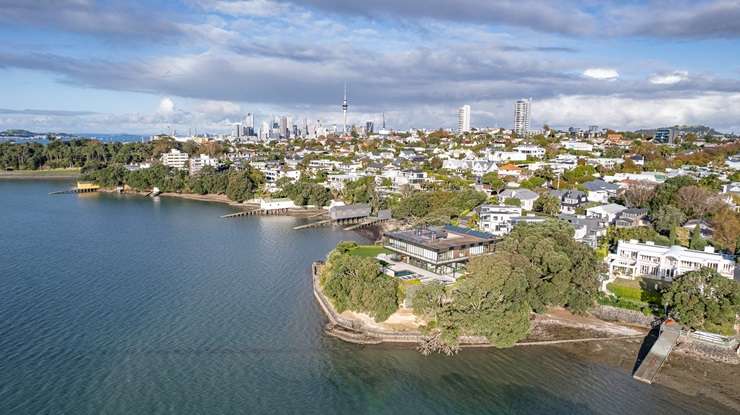
Herne Bay is one of 151 Auckland suburbs with an average property value of $1m and above, but the last five years have seen 21 suburbs in the city exit the club. Photo / Chris Tarpey
The standout performers are Omaha and Matakana, where values have risen 22% and 15.4% respectively. Omaha has also become a new member of the $3m club, while Matakana and Onetangi have crossed into the $2m bracket.
Elsewhere, however, values have retreated significantly. Totara Park recorded a 35% decline, Point England fell 32.7%, and Te Atatū Peninsula dropped 24%. Those suburbs have undergone major changes in housing stock, with extensive townhouse development contributing to shifts in average values.
Over the five years, Auckland lost eight suburbs from its $2m-plus club and 21 suburbs from its $1m-plus club.
Wellington’s painful correction
No region illustrates the post-boom housing downturn more starkly than Wellington. Homeowners who bought there in the spring of 2021 are most likely to be in negative equity.
The region’s average property value is now 22% lower than it was five years ago, making it the weakest performer among New Zealand’s major housing markets.
Not a single Wellington suburb recorded positive growth over the period.

Wellington had 61 suburbs in the $1m club five years ago. Now the tally stands at 17. Photo / Getty Images
Aro Valley suffered the largest decline, with values down 31.4%, followed closely by Northland, down 29.8%. Even the region’s best performer, Te Horo, experienced a 9.2% fall.
Perhaps most telling is the collapse in the number of million-dollar suburbs. Five years ago Wellington had 61 suburbs with average values above $1m. Today only 17 remain.
The result will be little comfort to homeowners, but it creates opportunities for buyers who were previously locked out of the capital’s housing market.
South Island gains momentum
While much of the North Island has struggled to regain momentum, the South Island has become the country’s housing success story in the last five years.
Canterbury is one of the strongest examples. Every one of the region’s 132 suburbs has a higher average property value than five years ago. Nine suburbs recorded growth exceeding 30%, led by Cracroft, where values surged 44.5%.
The number of Canterbury suburbs with an average property value of $1m-plus has climbed to 36, with 22 new entrants joining the club over the period. Fendalton and Kennedys Bush are now approaching the $2m mark.
Otago has also delivered standout results, particularly in the Queenstown-Lakes. More than half the region’s suburbs are worth more than they were five years ago, and 34 recorded gains of more than 20%, with Lake Hayes up by 61.5% and Arrowtown up by 57%.
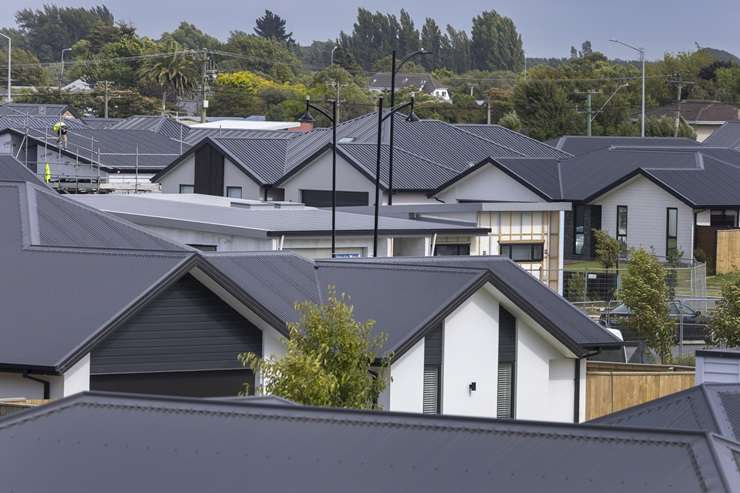
Houses in Kennedys Bush, in Christchurch. The suburb’s average property value has risen by 17.5% in the last five years to just over $1.8m. Photo / Peter Meecham
The region’s luxury market has strengthened significantly. Five years ago, Otago had 16 million-dollar suburbs and only two worth more than $2m. Today, Lake Hāwea, Luggate, Cromwell and Bridge Hill have all crossed the $1m threshold, while Arrowtown and Lake Hayes have joined Queenstown Hill in the $3m club.
Southland has produced perhaps the greatest surprise.
Five years ago, not a single suburb in the region was worth more than $1m on average. Today, Seaward Bush in Invercargill has crossed the seven-figure threshold, while Kingston and Te Anau are closing in.
Every Southland suburb recorded growth over the period. Mataura led the way with a 51.8% increase, followed by Te Anau at 42.9%.
Mixed fortunes elsewhere
Elsewhere around the country, housing performance has been highly uneven.
Northland delivered some strong gains, with values rising in 22 suburbs and five recording increases above 20%. Kaitaia and Ahipara were standout performers, with gains of 25% and 21% respectively. The region now has 13 million-dollar suburbs after Kerikeri and Waipapa joined the club.
Taranaki’s million-dollar club almost doubled in size, expanding from three suburbs to five. Waiwhakaiho and Lepperton joined established members Kaitake, Oakura and Hurworth.
In Waikato, values fell in 54 suburbs, including a 30% drop in Hamilton’s Peacocke. However, the declines often reflected changing housing stock rather than outright market weakness. Te Kuiti emerged as the region’s strongest performer, with values rising 22%.
Tasman largely held its ground despite Appleby dropping out of the million-dollar club after a near-20% decline.
In Hawke’s Bay, the story was less positive. Twenty-nine of the region’s 37 suburbs are now worth less than they were five years ago. Bluff Hill and Hospital Hill both lost their million-dollar status, reducing the tally to nine.
Nelson has also struggled. Only Bishopdale achieved growth over the five years, while the region’s two million-dollar suburbs, Stepneyville and Nelson, have both recorded value declines and face the prospect of slipping below the threshold.
Affordable markets still exist
Despite the prevalence of seven-figure housing markets, several regions continue to offer affordable options for buyers.
Bay of Plenty’s Murupara remains the country’s cheapest suburb, with an average property value of $213,000. Remarkably, that figure reflects a gain of more than 25% over five years.
Southland still has 11 suburbs where the average property value is below $500,000, while West Coast values remain well below the national average despite strong growth.
Even after gains approaching 60% in some locations, the West Coast’s most expensive suburb, Paroa, has an average property value of just $768,000.
A housing market reset
The latest figures highlight how dramatically New Zealand’s housing landscape has changed since the frenzy of 2021.
The extraordinary gains recorded during the Covid-era boom have largely evaporated in many parts of the country, particularly in Auckland and Wellington. Yet other markets, especially across the South Island, have continued to strengthen and in some cases flourish.
Five years after the country crossed the symbolic $1m threshold, the national housing market appears less defined by a single nationwide trend and more by regional divergence.
For homeowners in Wellington and parts of Auckland, the past five years have marked a painful correction. For owners in Queenstown, Canterbury and Southland, they have been years of remarkable growth.
- Click here to find properties for sale