- The cost-of-living crisis is expected to dominate the 2026 election, overshadowing housing issues.
- The Opportunity party proposes a land tax to reduce house prices and is nearing the 5% threshold.
- Economists say election policies may affect the property market, with potential impacts from tax changes.
The cost-of-living crisis, not housing, is expected to dominate the 2026 election, experts have told OneRoof.
Start your property search
But economists and political commentators warn that the November 7 poll may yet throw up some surprises for the property market.
The biggest unknown, some say, is the Opportunity, which is proposing a land tax to bring house prices down and is on the cusp of meeting the 5% threshold to get into Parliament.
Richard Shaw, a professor of politics at Massey University, said things were only starting to “crank up”, with parties still in the process of unveiling their candidates and drip-feeding their policies.
He said campaign headlines so far had been dominated by a “bunch of boomer politicians”, including Michael Laws and Harete Hipango for New Zealand First and Paul Henry for ACT.
All the polls indicated the cost-of-living crisis was the biggest issue for Kiwis, and while that could cover the cost of owning property, he thought housing was more a side issue.
The term “cost-of-living” meant different things to different people. “For some, it will be servicing a mortgage, for others, it will be buying petrol.”
Discover more:
- $4.1m isn't enough: 'Receivership' mansion fails to sell at auction
- Interest rate warnings: How much extra could you be paying?
- Home loan stoush: Bank denies it is 'trying to squeeze out brokers'
None of the policies announced by the major parties – including Labour’s targeted capital gains tax on the profit of a commercial property or residential property that is not the family home – was revolutionary, he said.
“Which is part of the reason why there are people I think who are on the left of Labour who are looking either at the Greens or in particular at Qiulae Wong and the Opportunity’s people.”
Opportunity is proposing a 1.75% annual Land Value Tax (LVT) on urban land and 0.5% on rural land to help keep property prices down and fund its Citizen Income.
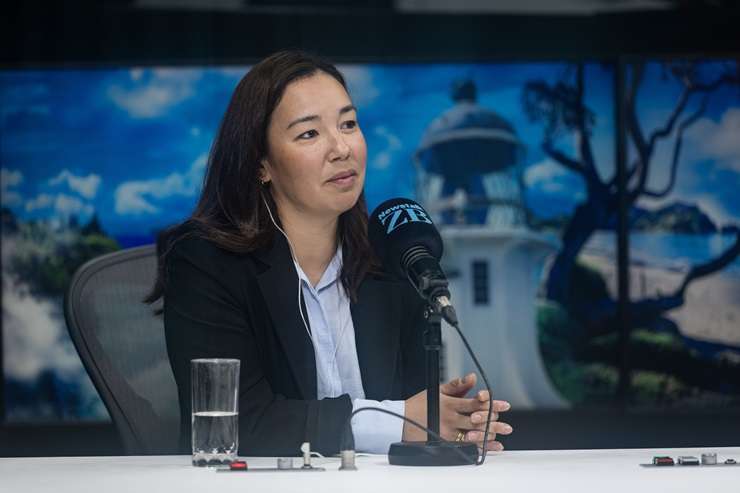
Opportunity Party leader Qiulae Wong wants to introduce a land tax to keep a lid of house prices. Photo / Dean Purcell
The latest RNZ-Reid Research political poll released last week had Labour sitting at 34% and National at 28.7%. Shaw said this was “historically low” for the two major parties and pointed to there being more input from the minority parties.
“National and Labour will not dominate this campaign in quite the same way that they have – even in 2023. So, I think the structure of the political debate as well and the number of voices that we hear might change the way we talk about housing.”
Economist Benje Patterson said the property market would be affected by the election – one way or another.
“Both Labour and the Greens are seemingly favourable towards higher income taxes for the higher levels of income. Secondly, both want to include some form of capital gains [tax].”

ANZ chief economist Sharon Zollner says the election is just one of several headwinds facing the housing market. Photo / Corey Fleming
Both policies, he said, would limit the spending of higher-income earners and make property purchases slightly less appealing.
“This isn’t saying it would trigger a steep decline in property prices; but it’s not going to be rosy.”
ANZ chief economist Sharon Zollner said the election was just one of many headwinds facing the property market. Interest rates and oil prices were also high on people's minds.
“People might start thinking, ‘We know what Opportunity wants, so what would Labour agree to get Opportunity to sign up with them?’ It’s pretty clear what direction that would drag their housing policy.”
People only had to look at what was happening in Australia to see the impact of tax changes on the housing market, she said.
Ray White AT Realty co-owner Tom Rawson said the housing market was in a holding pattern right now. “We’ve already got people thinking about the election and going, ‘Oh, we will just wait and see’. But I think those people were on the fence anyway.
“It’s frustrating for us because at the moment it doesn’t seem like any property-related policies are coming out, so maybe they are waiting to see what the policies are.”
However, GV Financials founder Gareth Veale said it was mainly investors who seemed to be holding off because they were worried interest tax deductibility rules could be reversed if there was a change in government.
“At the start of the year I was seeing a lot more investors keen to give it a crack; not so much at the moment.”
- Click here to find properties for sale