OneRoof’s Ask the Expert series is aimed at helping consumers cut through the noise when buying goods and products for their home. It’s hard to make a decision when there’s so much out there, so who better to trust than the people who have the expertise and use these items for a living?
In most Kiwi households, the couch will be the most used piece of furniture, the centre of gravity for families at the end of a day. It’s the spot where everyday life happens, so choosing the right one is important, especially given the cost involved.
Choose well, and you’ve got a welcoming, comfortable space for life. Choose poorly, and you end up with something that’s out of whack with the rest of your house and plain uncomfortable.
Where to start?
Start your property search
Sharon Milburn, owner of Lounge Design, says the difference between a good sofa and a bad one isn’t always obvious.
Her advice is to start with the bones, not the fabric. The structure of a sofa will determine whether it lasts five years or 20. “If you buy quality, you can always recover it with new fabric down the track. Get the bones right, and you’ll have a sofa for years and years,” Milburn says.
Milburn suggests sofa shoppers concentrate on the following:
- Weight (a well-made sofa should feel heavy, indicating a strong frame);
- Materials (New Zealand-made sofas often use South Island pine, which constitutes a strong frame); and
- Guarantees (does the manufacturer stand behind their product with guarantees?).
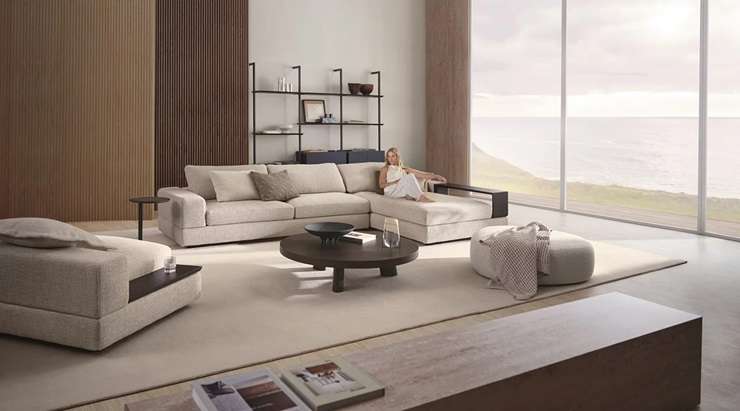
The Jasper sofa from King Living. Photo / Supplied
For example, King Living sofas come with a 25-year frame warranty while electrical components are covered for one year. Sofa fillings and non-electrical components can be covered for up to 15 years on a pro-rata decreasing scale, while fabrics can be covered for up to five years, also on a decreasing scale. Nick Scali sofas also have a lifetime frame warranty, while motion components and fabrics carry a two-year manufacturer’s warranty.
“Ask questions in store,” says Milburn. “Good sales staff should be able to explain what’s inside your sofa and how it will perform over time.”
Find the couch that fits you
A standard sofa depth is usually around 900mm, says Milburn, but if you like to curl up and watch TV, you might want something deeper. “Seat height, depth and back height should all feel in proportion. If they’re not, the sofa will look and feel slightly off,” she says.
Interior designer Hayley-Ann Brown, from Lou Brown Design, says experienced makers can customise dimensions and cushioning to suit your body.

Interior designer Hayley-Ann Brown from Lou Brown Design: "Fabric choice is critical." Photo / Supplied
Brown says low sofas may look sleek but can lack back support and be difficult to get in and out of. She advises shoppers to test the seat depth and seat height.
Kovacs offers a sleek range of sofas and is recommended by Brown. Stockists are listed on their website and include McKenzie & Willis Interiors.
Brown also suggests asking if the manufacturer can do a “frame sitting”. Lounge Design offers this for clients, allowing them to sit on the frame and foam before the sofa is upholstered.
Brown recommends David Shaw and Modern Chair for quality New Zealand-made sofas.
The biggest mistakes people make when buying a sofa
Brown says there are three common pitfalls homeowners fall into: choosing the wrong type of sofa, the wrong size, and the wrong fabric. “The biggest mistake is not understanding how the room will be used,” she says.
For example, popular L-shaped sofas aren’t always the best option. “Modular or L-shape sofas can work well, particularly in media rooms or large spaces, but they often feel bulky and can interrupt circulation through the space. They are also less conducive to conversation compared with separate seating pieces,” says Brown.
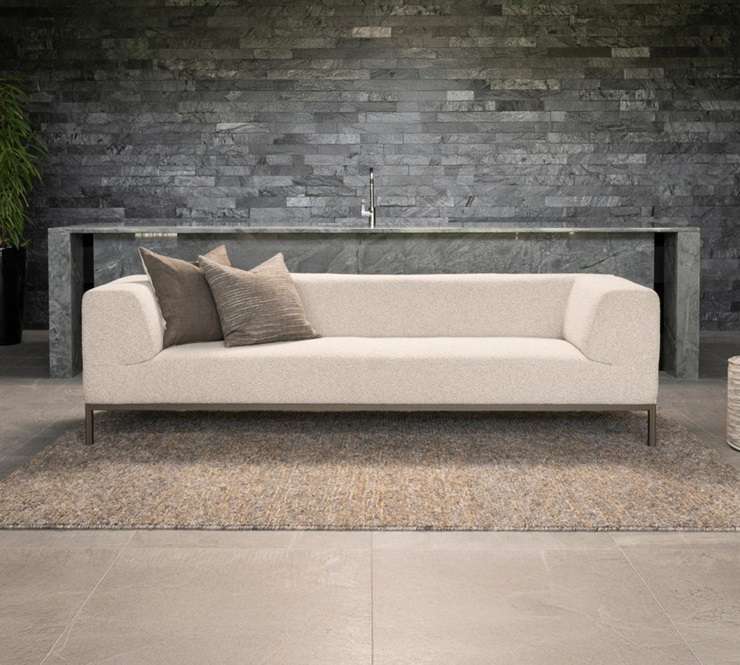
The Bertie Sofa by Kovacs. Photo / Supplied
If the space is for conversation and entertaining, she recommends two sofas with armchairs to create a more social layout.
Brown says size is another frequent issue, with shoppers often buying before they’ve mapped out their room layout. She urges buyers to identify where circulation paths will run, where people enter and exit the room, and where side tables, the rug and lighting will sit. Allow at least 650mm between seating so people can move comfortably.
Milburn says planning is key. “You’d be surprised how many people don’t measure their space. A bit of thought before you buy makes all the difference.”
Sofa fabric matters
“In New Zealand, UV is a big factor,” Milburn says. “If you put a 100% cotton fabric in direct sunlight, it’s not going to last.”
Brown recommends taking samples home before committing. “What looks neutral in a showroom can have completely different undertones in your home,” she says.
Choose high UV-rated fabrics for sunny rooms and consider commercial-grade fabrics in busy households. Stain-resistant options are also an important consideration for lighter colours.
“Fabric choice is critical. Many people are drawn to imported sofas for their apparent value, but often discover poor fabric quality leads to quick fading, sagging, and wear,” says Brown.
She recommends James Dunlop for quality fabrics. If you’re looking for leather without the maintenance, she also recommends Textila. Fabric covering from Warwick also ranks highly and can often be chosen for sofas from the likes of Freedom in the Australian and New Zealand-made ranges.
Ultimately, choosing the right sofa comes down to looking beyond the surface. Focus on how well it is made, how it feels and how it fits your space, and you’ll end up with a piece that stands up to everyday life for years to come.